

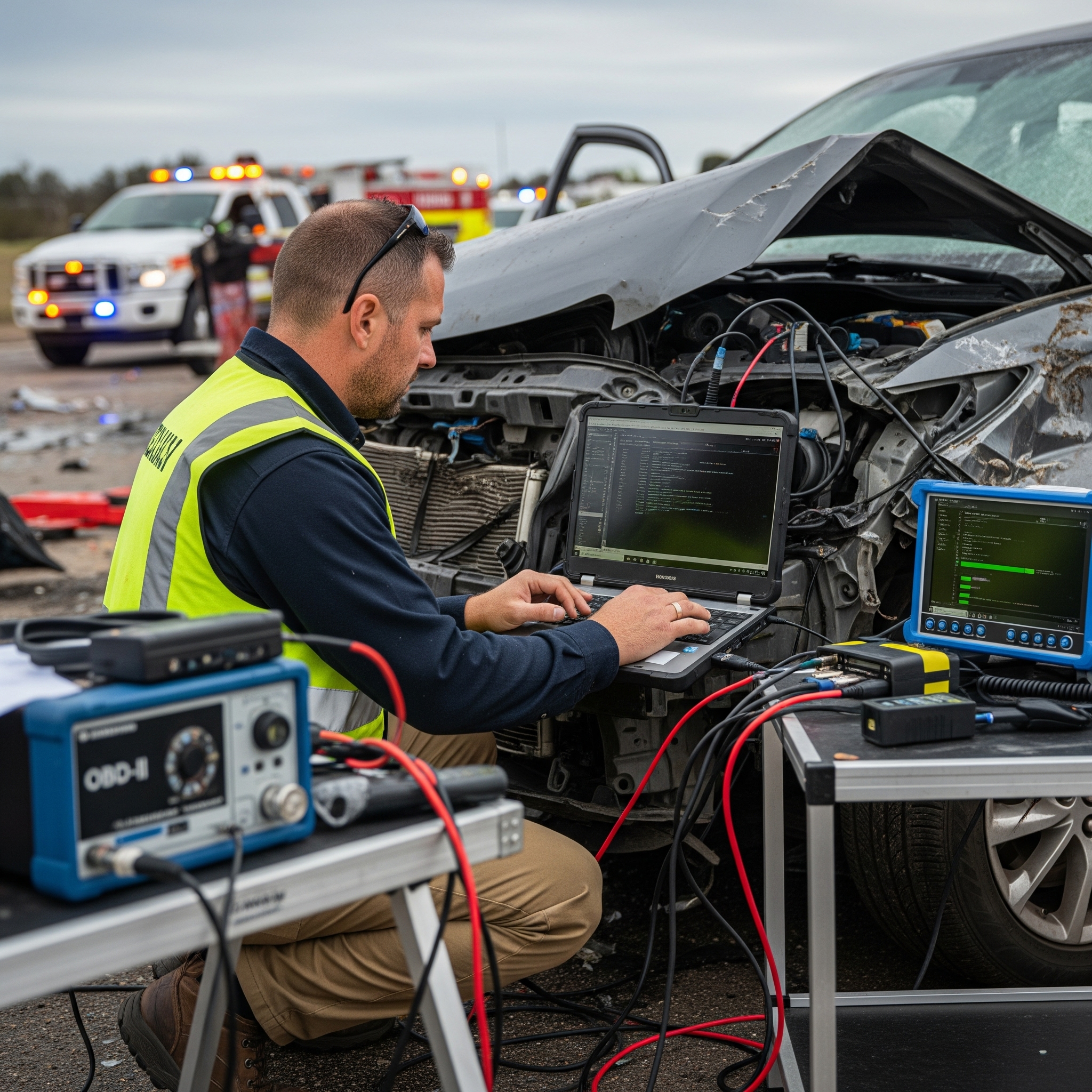
After a serious car crash, it often comes down to one person’s word against another’s. The other driver might claim you were speeding, that you braked too late, or that they had the right of way. Without objective proof, insurance companies can use this ambiguity to deny your claim or reduce your settlement. But what if there was a silent, unbiased witness that recorded exactly what happened in the moments before, during, and after the impact?
For most modern vehicles, this witness exists. It’s called an Event Data Recorder (EDR), and it functions much like the “black box” in an airplane. This small device, built into your car’s airbag control module, is one of the most powerful tools in a modern personal injury lawsuit, and knowing how to use its data can be the key to winning your case.
An article on the legal site JD Supra discusses the critical role of electronic data in accident reconstruction, highlighting how this technology has revolutionized our ability to prove what really happened in a crash. It’s a tool we use to cut through the confusion and get to the truth.
What Critical Data Does a Car’s Black Box Record?
The EDR doesn’t record audio or video. Instead, it captures a snapshot of crucial data for the few seconds immediately before and during a crash. This includes:
- Vehicle Speed: It can definitively prove how fast each vehicle was traveling, debunking false claims of speeding.
- Brake Application: Did the other driver hit the brakes? The EDR knows, showing the exact moment the pedal was pressed and with how much force.
- Throttle Position: Was the driver accelerating at the moment of impact? The data will show it.
- Steering Wheel Angle: This can help reconstruct the driver’s actions and determine if they attempted to avoid the collision.
- Seatbelt Use: The EDR logs whether occupants were properly buckled.
- Force of Impact (Delta-V): This measures the change in velocity during the crash, providing scientific data to counter claims that an impact was too “minor” to cause serious injury.
This data is the ultimate fact-checker. It can expose a driver who was distracted, who failed to brake, or who was accelerating through an intersection. It provides the hard evidence needed to hold negligent drivers accountable.
How We Use EDR Data to Win Your Case
Obtaining and interpreting black box data is a highly technical process. The data must be downloaded quickly before it is overwritten or the vehicle is destroyed. It requires specialized equipment and certified experts to ensure the data is preserved correctly and is admissible in court.
This is a critical part of our investigation in any serious vehicle collision case, whether it’s a car accident, a devastating truck accident, or a complex motorcycle accident.
Here’s how we leverage this technology:
- We Act Fast: We immediately send a spoliation letter to the at-fault party’s insurance company, legally demanding that they preserve the vehicle and its EDR data.
- We Hire the Experts: We work with top accident reconstructionists who have the tools and training to download and analyze the black box data.
- We Build an Unbeatable Case: The EDR data, combined with witness statements, police reports, and medical records, allows us to create a detailed, second-by-second reconstruction of the crash that leaves no room for doubt.
When an insurance company is faced with indisputable data showing their driver was at fault, their ability to deny liability evaporates. This gives us powerful leverage to demand the full and fair compensation you are owed.
Don’t let your case become a “he said, she said” battle. Let us use the power of technology to uncover the truth.
If you have been seriously injured in an accident, it is crucial to have a legal team that understands the importance of this electronic evidence. Contact Manoukian Law for a free and confidential consultation to learn how we can put this technology to work for you.