

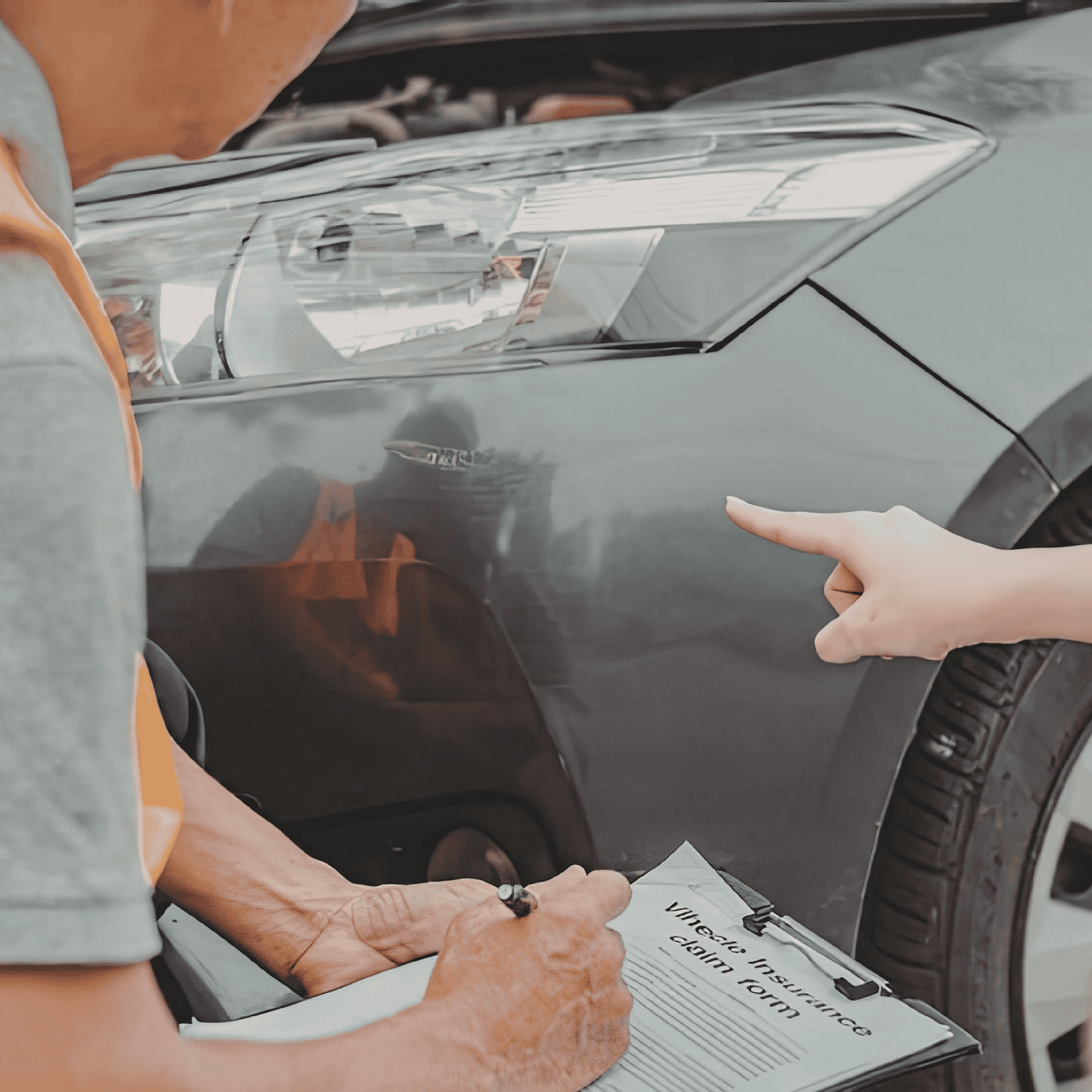
If you have been T-boned by a speeding Amazon delivery van in the San Fernando Valley, rear-ended by a massive UPS truck on the 101 Freeway, or struck by a distracted Uber driver in downtown Los Angeles, your life has been abruptly turned upside down. As the medical bills for your surgeries, physical therapy, and hospital stays begin to pile up, and your lost wages severely strain your family’s finances, you need answers. If this sounds familiar, your first call should be to an experienced Amazon delivery truck accident lawyer who knows how to fight these corporate giants.
The most pressing question on your mind is likely: “How long is it going to take to settle this case and get my money?”
It is a completely natural question. When you are drowning in debt and physical pain through no fault of your own, you want the legal nightmare to end as quickly as possible. However, if you are expecting a swift, 60-day payout from a corporate behemoth like Amazon, FedEx, or Uber, you need to prepare for a harsh legal reality.
Getting hit by a commercial delivery vehicle or a rideshare driver is fundamentally different—and far more complex—than getting hit by a regular commuter. Because there are massive corporate insurance policies at stake, these companies will deploy elite defense teams to delay, deny, and drag out your case.
At Manoukian Law Firm, based right here in Woodland Hills and Chatsworth, we don’t just guess what these massive insurance companies are going to do we know their exact playbook. Our founder, Vaheh Manoukian, Esq., began his legal career working for one of the largest insurance companies in the nation. He learned exactly how these corporate giants evaluate claims, value cases, and utilize delay tactics to protect their bottom line. Today, he uses that insider knowledge to fight exclusively for injured victims as a dedicated Amazon delivery truck accident lawyer.
Here is the honest truth about the timeline of commercial vehicle accident cases in California, the specific corporate roadblocks you will face, and why having an attorney with insider insurance experience is your most valuable asset.
1. The Short Answer: What is the Standard Timeline?
While every personal injury case is unique, we believe in radical transparency with our clients. We must be candid about the timelines when massive logistics corporations are involved.
Best-Case Scenario (Clear Liability, Fast Healing): 9 to 14 months.
Average Scenario (Moderate to Severe Injuries, Pre-Litigation Settlement): 12 to 18 months.
Litigation Scenario (Disputed Liability, Corporate Roadblocks, Severe Injuries): 2 to 3+ years.
Why does it take so long? The answer boils down to three primary factors: Maximum Medical Improvement (MMI), million-dollar policy limits, and the “Corporate Shield.”
2. The Million-Dollar Difference: Why Commercial Cases Take Longer
If you are rear-ended by a neighbor driving a standard sedan, you are usually dealing with a standard California auto insurance policy, which might only carry $30,000 or $50,000 in liability limits. If your injuries clearly exceed that amount, the insurance company will often pay out the limits relatively quickly to avoid a bad-faith lawsuit.
Commercial vehicles operate in an entirely different financial stratosphere.
Deep Pockets Mean Aggressive Defenses
Companies like UPS, FedEx, Amazon, and Uber carry massive commercial liability policies. For Uber, if the driver has a passenger in the car, the policy limit is $1,000,000. For major delivery and freight companies, the limits can easily exceed $5,000,000 to $10,000,000.
Having worked on the defense side for a major national insurer, Vaheh Manoukian knows firsthand that insurance companies do not simply write seven-figure checks because you asked nicely. When a million dollars is on the line, the insurance company will spend hundreds of thousands of dollars on private investigators, accident reconstruction experts, and aggressive defense lawyers. Their goal is to drag the case out, hoping you become so financially desperate that you accept a lowball settlement offer just to keep a roof over your head. An Amazon delivery truck accident lawyer understands that these massive policy limits trigger an entirely different level of corporate resistance.
Multiple Defendants and “The Blame Game”
In a standard crash, you sue the at-fault driver. In a commercial crash, your legal team must untangle a complex web of corporate liability. We have to investigate:
The Driver: Were they speeding, distracted by an app, or fatigued?
The Corporation: Did the company’s routing algorithm force the driver to skip breaks and speed to meet unrealistic delivery quotas?
The Maintenance Crew: Did the local fleet manager fail to replace bald tires or fix faulty brakes on the step-van?
The more defendants involved, the longer the investigation takes. Corporate defendants will spend months pointing the finger at each other instead of paying you. You need a law firm that knows how to cut through the red tape and hold all liable parties accountable.
3. The “Amazon DSP” Shield: Why Suing Amazon is Uniquely Complex
If you are hit by a dark gray van with the blue Amazon “smile” logo on the side in the San Fernando Valley, you might think you are suing Amazon directly. You are usually not.
To shield itself from liability, Amazon utilizes a complex system of Delivery Service Partners (DSPs). The person wearing the Amazon uniform and driving the Amazon-branded van is often not an Amazon employee. They are an employee of a small, third-party logistics company that Amazon hires to run routes.
How the DSP System Delays Your Case
When a claim is filed against Amazon for a crash, their corporate lawyers will immediately file a motion to dismiss Amazon from the lawsuit. They will argue: “We didn’t cause this crash. The driver doesn’t work for us; they work for XYZ Logistics. Sue them instead.”
This is a deliberate corporate stall tactic. Piercing the DSP corporate structure is one of the most critical skills an Amazon delivery truck accident lawyer must have. To secure maximum compensation for you, your attorney must fight to “pierce the corporate veil.” At Manoukian Law Firm, we know how to demand the internal corporate documents required to prove that Amazon exercised heavy control over the DSP driver—dictating their routes, monitoring their speed, and setting their grueling schedules. Proving this level of control allows us to bypass the DSP shield and go after the parent company, but acquiring these documents adds significant time to the litigation phase.
4. The Uber and Lyft Phase System: Determining Which Policy Applies
Rideshare cases have their own unique delays, primarily revolving around exactly when the crash occurred. Uber and Lyft utilize a highly specific three-phase system to determine how much insurance coverage applies to your accident. The rideshare company will spend months investigating the driver’s app data to figure out which phase they were in to minimize their payout.
Period 1: App is ON, but NO Ride Accepted
If the Uber driver was logged into the app, waiting for a ping, but had not accepted a ride when they hit you, Uber’s million-dollar policy does not apply. Instead, a much smaller contingent liability policy applies (usually $50,000 per person / $100,000 per accident). Uber’s defense team will fight aggressively to prove the driver was in Period 1 to save their company hundreds of thousands of dollars.
Period 2: Ride Accepted, En Route to Passenger
If the driver had accepted a ride and was driving to pick up the passenger when they caused the crash, the $1,000,000 commercial policy kicks in.
Period 3: Passenger in the Vehicle
From the moment the passenger enters the vehicle until they step out, the $1,000,000 commercial policy is active. This covers both the passengers inside the Uber and anyone the Uber driver hits (pedestrians, cyclists, or other drivers).
If Uber disputes which period the driver was in, your attorney will have to legally subpoena the digital GPS and server logs from Uber’s headquarters to prove exactly what the driver was doing at the millisecond of impact. This digital forensic work takes time, but it is essential to unlocking the million-dollar policy.
5. UPS and FedEx: Fighting the Freight Behemoths
Accidents involving UPS “package cars” (the brown delivery trucks) or FedEx step-vans represent some of the most catastrophic personal injury cases on Southern California roads. Because these vehicles are essentially massive steel battering rams, they cause devastating injuries even at low speeds.
Uncovering Safety Violations
To win a massive settlement against UPS or FedEx, your lawyer cannot just prove the driver made a mistake. We must prove corporate negligence. This means we will spend months legally demanding:
The driver’s employment file, drug testing history, and background checks.
The truck’s telematics data (black box), which records hard braking, speeding, and steering inputs.
The driver’s hours-of-service logs to prove they were driving while illegally fatigued.
UPS and FedEx have massive, in-house legal departments dedicated to fighting these document requests. Having spent years on the defense side, Vaheh Manoukian anticipates these delay tactics. We don’t wait for the corporations to cooperate; we aggressively petition California judges to formally order these companies to hand over the evidence.
6. The Standard Timeline Breakdown: Phase by Phase
If you have been severely injured by a commercial vehicle, here is the realistic timeline you should prepare for as your Amazon delivery truck accident lawyer builds your case:
Phase 1: Maximum Medical Improvement (Months 0 to 9+)
You can never settle a case until you have reached Maximum Medical Improvement (MMI). If an Amazon van caused a severe back injury requiring spinal surgery, we cannot demand a settlement while you are still recovering. We must wait until you have fully healed (or healed as much as you ever will) so we know the exact, final cost of your medical bills and your future lost earning capacity. Your body dictates the timeline of this phase.
Phase 2: Investigation and The Demand Letter (Months 6 to 12)
Once you reach MMI, your legal team orders your final medical records. Simultaneously, we gather police reports, commercial dashcam footage, and expert accident reconstruction reports. We then draft a massive, comprehensive Settlement Demand Letter and send it to the corporation’s insurance carrier.
Phase 3: Pre-Litigation Negotiation (Months 10 to 14)
The insurance company will review our demand and issue a counteroffer. Because Vaheh Manoukian knows how insurers value claims, we ensure our demands leave no room for arbitrary discounts. If the corporate insurer offers a fair settlement that covers all your damages, the case can successfully end here.
Phase 4: Litigation and Discovery (Months 12 to 24+)
If the commercial insurer denies liability or offers a disrespectful lowball amount, we file a formal lawsuit. This triggers the “Discovery” phase. Over the next year, we will depose the delivery driver under oath, demand corporate routing algorithms, and prepare medical experts for trial.
Phase 5: Mediation and Trial (Months 18 to 36)
As a trial date approaches, massive corporations will frequently agree to a multi-million dollar settlement at Mediation to keep the case out of the public eye and avoid a jury seeing their internal safety violations. If they still refuse, we are fully prepared to take them to trial.
7. The Manoukian Law Difference: You Are Never Just a File Number
When you are enduring a grueling 18-month legal battle against Amazon or Uber, the last thing you want is to feel ignored by your own law firm.
At large, “billboard” personal injury firms, your case is often handed off to a paralegal or a non-attorney “case manager.” You might go months without speaking to an actual lawyer.
That is not how we operate at Manoukian Law Firm. Vaheh Manoukian built this firm on a foundation of elite, highly personalized client service. He understands that every person who walks through his doors has a unique story, and no two injuries are the same. As your dedicated Amazon delivery truck accident lawyer, when you hire Manoukian Law:
You work directly with Vaheh. He is personally involved at every stage of the case, from the first phone call through litigation, settlement negotiations, and trial.
You get his personal cell phone number. Vaheh gives his direct line to every single client so they can reach him whenever questions, anxieties, or concerns arise.
You get an advocate, not just an attorney. We take the time to understand the exact details of how your injury has impacted your daily life, allowing us to build stronger cases and craft strategies that reflect your real-world suffering.
Conclusion: Don’t Let Corporate Bullies Starve You Out
When you are fighting Amazon, UPS, FedEx, or Uber, time is the weapon they use against you. They know you have mortgage payments due and medical bills piling up. Their strategy is to drag the process out so long that you become desperate enough to accept pennies on the dollar.
You cannot fight a war of attrition against a billion-dollar corporation on your own, and you shouldn’t trust your future to a firm that passes you off to an assistant.
You need a law firm with the insider knowledge to beat the insurance companies at their own game. You need Manoukian Law Firm. We know their delay tactics, we know how they calculate risk, and we know exactly how to force them to the settlement table. As the Amazon delivery truck accident lawyer Los Angeles injured victims turn to, Vaheh Manoukian is ready to fight for you.
Were you or a loved one injured by an Amazon, UPS, FedEx, or rideshare vehicle in Woodland Hills, Chatsworth, or the greater Los Angeles area?
Do not wait for the corporation to “do the right thing”—they won’t. Let us take the stress off your shoulders so you can focus on healing and moving forward with your life.
Contact Manoukian Law Firm today for a free, no-obligation consultation. Call us at (818) 818-5031 or email Contact@ManoukianLaw.com. Vaheh will personally review your case and provide the trusted counsel you need to take back your life.
Disclaimer: The information provided in this article is for educational and informational purposes only and does not constitute legal or medical advice. Personal injury laws and commercial auto insurance regulations in California are complex and subject to change. The timeline and outcome of any legal case depend on specific factual and legal circumstances; past success does not guarantee future results. Reading this article does not create an attorney-client relationship. If you are suffering from injuries after an accident with a commercial vehicle, please seek immediate medical attention and consult with a licensed California personal injury attorney.