

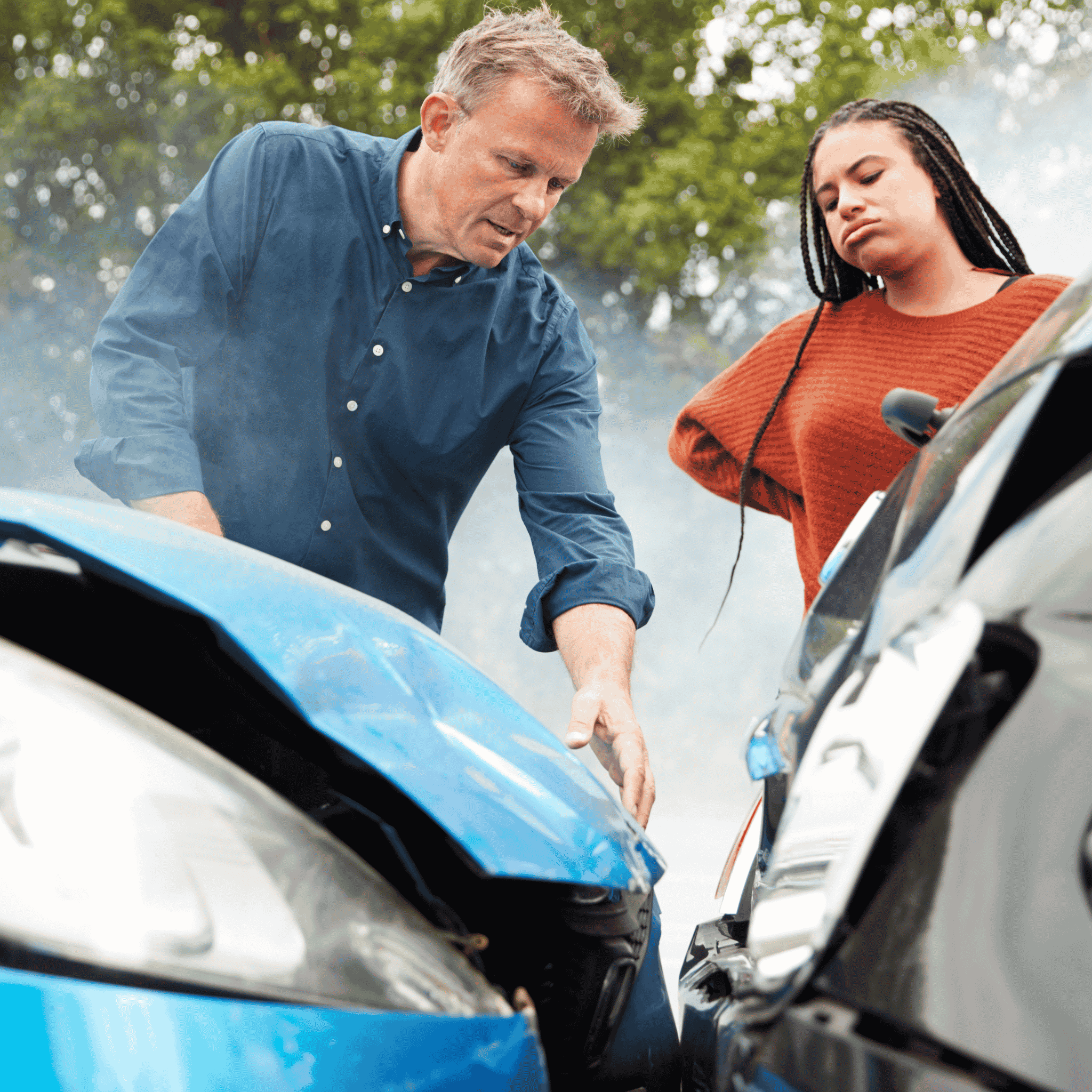
California law requires all drivers to carry auto liability insurance. But a startling number of drivers on California roads — estimates suggest roughly 15–17% — are uninsured. And many more carry only the minimum liability limits ($15,000 per person, $30,000 per accident), which are wholly inadequate to cover serious injuries in even a moderately severe collision.
If you’ve been seriously injured by a driver who has no insurance, or whose insurance limits are too low to cover your full damages, you may feel like there’s nowhere to turn. But there are important options available — and an experienced uninsured motorist attorney California victims rely on can help you navigate every one of them, starting with your own auto insurance policy.
Understanding Uninsured and Underinsured Motorist Coverage
Uninsured Motorist (UM) Coverage protects you when you are injured by a driver who has no liability insurance at all. Under California Insurance Code Section 11580.2, all California auto insurers are required to offer UM coverage to every policyholder. While you can waive this coverage in writing, most attorneys strongly advise against it.
Underinsured Motorist (UIM) Coverage applies when the at-fault driver has insurance, but their policy limits are insufficient to fully compensate you for your injuries. For example, if the at-fault driver carries the California minimum of $15,000 in liability coverage but your damages total $150,000, your UIM coverage can potentially make up the difference — up to your own policy’s UIM limits.
Both UM and UIM coverage must be offered by your insurer in limits equal to your liability coverage limits, though you can elect lower limits. California law also prohibits stacking of UM/UIM coverage in most circumstances.
When Does UM Coverage Apply?
Uninsured motorist coverage applies in several situations beyond the obvious scenario of being hit by a driver with no insurance:
Hit-and-Run Accidents
If you are injured by a driver who flees the scene and cannot be identified, your UM coverage treats the hit-and-run driver as an uninsured motorist. However, California law requires that there be physical contact between your vehicle and the hit-and-run vehicle (or the vehicle of a “phantom driver” who forced you off the road) for UM coverage to apply in most circumstances. Witness corroboration of a hit-and-run with no physical contact may also qualify in some cases.
Insolvent Insurance Company
If the at-fault driver has insurance but their insurer becomes insolvent (bankrupt) and cannot pay, your UM coverage may step in.
Stolen Vehicle
If you are hit by a thief driving a stolen car, the owner’s insurance typically does not cover the thief’s negligence. Your UM coverage would be available.
Pedestrian or Cyclist Hit by an Uninsured Vehicle
UM coverage protects not just occupants of your vehicle, but often extends to you as a pedestrian or cyclist hit by an uninsured motorist, depending on your policy terms.
How to Make a UM/UIM Claim
Filing a UM or UIM claim is, in one sense, straightforward — you are filing a claim with your own insurance company. But this does not mean the process is simple or that your insurer is on your side. This is exactly why working with a knowledgeable uninsured motorist attorney California accident victims recommend makes all the difference.
Step 1: Notify Your Insurer Promptly
Your policy almost certainly requires you to notify your insurer of a potential UM/UIM claim promptly. Waiting too long can give the insurer grounds to deny your claim. Notify them as soon as you know the at-fault driver is uninsured or underinsured.
Step 2: Investigate the At-Fault Driver’s Coverage
Before you can pursue UIM coverage, you typically need to establish that the at-fault driver’s limits are insufficient. Your attorney can help obtain this information through formal legal channels.
Step 3: Exhaust the At-Fault Driver’s Policy (for UIM)
In most cases, you must first settle with the at-fault driver’s insurer (up to their policy limits) before your UIM coverage applies. California law requires you to get permission from your own UM/UIM insurer before settling with the at-fault driver, or you may jeopardize your UIM claim.
Step 4: Present Your Damages to Your UM/UIM Insurer
Your UM/UIM claim is essentially a claim that you would have made against the at-fault driver if they had adequate insurance. The insurer will evaluate your damages — medical expenses, lost wages, pain and suffering — the same way the at-fault driver’s insurer would.
Step 5: Negotiate or Arbitrate
If you and your insurer cannot agree on the value of your UM/UIM claim, California law provides for binding arbitration rather than a lawsuit in most cases. Having an uninsured motorist attorney California who is experienced in UM/UIM arbitration is extremely valuable.
The Catch: Your Own Insurer Is Not Your Friend
There is something deeply uncomfortable about making a claim against your own insurance company — the company you’ve been paying premiums to for years. But it’s important to understand that your insurer has the same financial incentive to minimize your UM/UIM payout as any other insurance company.
Common tactics UM/UIM insurers use to reduce payouts include:
• Disputing the severity of your injuries
• Arguing that your medical treatment was unnecessary or excessive
• Claiming your injuries were pre-existing
• Disputing the causal link between the accident and your symptoms
• Offering a quick, low-ball settlement before you understand the full extent of your damages
This is why having an uninsured motorist attorney California represent you in a UM/UIM claim is so important — even though it’s your own insurer on the other side of the table.
What if the At-Fault Driver Has No Assets?
Some accident victims consider suing an uninsured driver personally, reasoning that if the driver doesn’t have insurance, they can still be held legally liable in a lawsuit. This is theoretically true — but practically speaking, uninsured drivers typically lack the assets to satisfy a judgment. A judgment against an uninsured, asset-poor driver is often uncollectable in any meaningful sense.
This is the primary reason why uninsured motorist coverage in your own policy is so important. It provides real, collectable compensation from an insurer, rather than an uncollectable judgment against someone who cannot pay.
California’s Mandatory Minimum Insurance: Why It’s Often Not Enough
California requires drivers to carry at minimum $15,000 in bodily injury liability coverage per person and $30,000 per accident. These minimums haven’t been substantially updated in decades and are completely inadequate for serious injury cases in today’s healthcare environment.
A single night’s stay in an intensive care unit can exceed California’s entire minimum per-person coverage. A surgery, physical therapy, and months of treatment can easily run into the hundreds of thousands of dollars. If the at-fault driver carries only minimum limits, your UIM coverage — not the other driver’s policy — may end up being the primary source of real compensation for your injuries.
This is why most personal injury attorneys strongly advise clients to carry as much UM/UIM coverage as they can reasonably afford on their own policies.
Pedestrians and Cyclists: Are You Covered?
If you were hit by an uninsured driver while walking or riding a bicycle, you may be able to make a UM claim under the auto policy of any vehicle you are a “named insured” on (typically your own vehicle, or a family member’s vehicle if you live with them). Some policies also cover pedestrians and cyclists explicitly. An uninsured motorist attorney California can review your policy’s terms and identify all available coverage that applies to your situation.
The Statute of Limitations for UM/UIM Claims in California
The statute of limitations for UM/UIM claims is typically governed by the terms of your insurance contract rather than the general personal injury statute of limitations. Many policies set a two-year deadline from the date of the accident, which runs concurrently with the two-year personal injury statute of limitations under California law.
However, insurance contract provisions are complex, and there are arguments to be made about when the limitations period begins to run in different circumstances. A qualified uninsured motorist attorney California can advise you on the specific deadlines that apply to your claim and ensure no critical window is missed.
Contact Manoukian Law: Uninsured Motorist Attorney California
At Manoukian Law, we handle uninsured and underinsured motorist claims for accident victims throughout Los Angeles and the San Fernando Valley. As a trusted uninsured motorist attorney California clients have relied on for years, we know how to hold your own insurer accountable when they try to shortchange your claim, and we have the experience to take your case to arbitration or court if necessary.We handle UM/UIM cases on a contingency fee basis — you pay nothing unless we recover compensation for you. Contact us today for a free consultation to understand your options. If you need an uninsured motorist attorney California who will fight to get you every dollar you deserve, Manoukian Law is ready to help.