If a pothole, a missing or hidden stop sign, a dark traffic signal or a badly designed intersection caused your crash on a Valley street, the 118 or the 405, the party responsible may be a public entity rather than another driver, and a written claim must reach that entity within six months of the crash under Government Code 911.2. Which entity depends on who owns the road. Surface streets inside the City of Los Angeles are the City’s, unincorporated roads are the County’s, and the freeways belong to Caltrans.
The claim is only the beginning. The Government Code gives public entities defenses a private driver does not have, including immunity for approved designs, and prior complaints about the same pothole or intersection are often what wins the case. Our general guide to the six-month government claim deadline covers the claims process for every public entity. This post is about crashes caused by the road.
Who owns the road
Most Valley streets, from Sherman Way in Reseda to Devonshire Street in Chatsworth, belong to the City of Los Angeles. Within the City, the Bureau of Street Services, known as StreetsLA, fills potholes and resurfaces pavement, and the Department of Transportation, LADOT, maintains stop signs, signals and striping. The claim is filed with the City Clerk rather than with either department, but the form asks which department was responsible.
Unincorporated pockets and County-maintained roads, including some areas around the Santa Susana and Santa Monica foothills, are County of Los Angeles responsibility. Santa Clarita is its own city with its own claim process, while the unincorporated roads around it are the County’s; our Santa Clarita page covers that area.
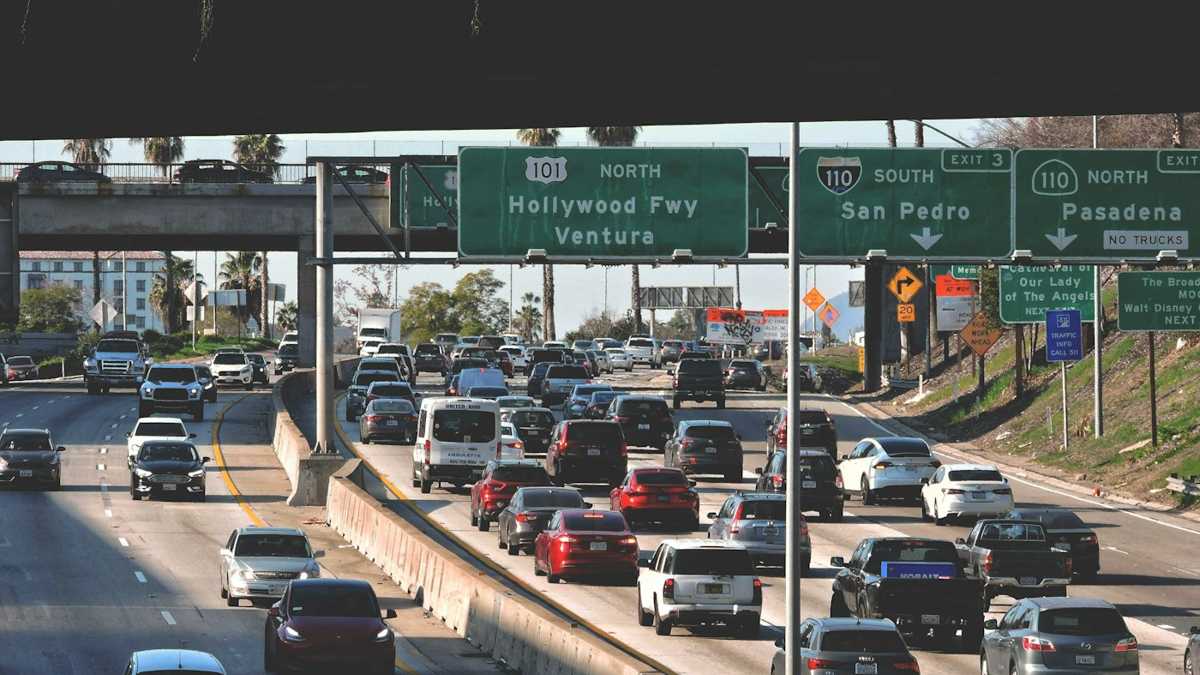
The 118, the 405, the 101, the 170, the 5 and the 210 are state highways maintained by Caltrans District 7, and so is Topanga Canyon Boulevard, which is State Route 27. A pothole on the 118 through Chatsworth or a missing sign on a Caltrans ramp is a claim against the state, and our post on 118 Freeway crashes between Chatsworth and Simi Valley covers the first steps after a freeway collision. When ownership is unclear, present a claim to every entity that might be responsible.
What the law requires you to prove
Government Code 835 requires proof that the road was in a dangerous condition at the time of the crash, that the condition caused the crash, that it created a reasonably foreseeable risk of the kind of injury that happened, and that either an employee negligently created the condition or the entity had actual or constructive notice of it long enough before the crash to have fixed it.
Notice is where these cases are won or lost. Under Government Code 835.2, actual notice means the entity knew the condition existed and knew or should have known it was dangerous. Constructive notice means the condition existed long enough and was obvious enough that a reasonable inspection system should have found it. A pothole that opened in last night’s rain is a hard case; one that neighbors reported three times over two months is not.
Government Code 830 defines a dangerous condition as one that creates a substantial risk, as distinguished from a minor or trivial one, to someone using the road with due care, so a shallow depression may be argued to be trivial. Measurements and photographs matter as much in a pothole case as in a sidewalk case.
Design immunity in plain terms
The defense you will hear most often in a sign or signal case is design immunity under Government Code 830.6. If the intersection, the ramp or the signal timing was built according to a plan that a public body or an authorized employee approved in advance, and there is substantial evidence that a reasonable employee or body could have approved it, the entity is not liable for injuries caused by that design.
There are limits. When the road no longer conforms to the approved design, the immunity continues only for a reasonable time to fund and carry out the fix, or while the entity reasonably attempts to warn. And design immunity is about design. A stop sign that was approved, installed and later knocked down or hidden by an overgrown tree is generally treated as a maintenance problem rather than a design problem, and the same argument applies to a signal that went dark and stayed dark. Those cases are argued under Government Code 835 and the notice rules rather than under 830.6.
A second immunity, Government Code 831.4, covers unpaved roads and trails that provide access to recreation, such as the fire roads above Chatsworth. It does not apply to an ordinary city street or highway.
Why prior complaints matter, and where to find them
The City takes pothole reports through MyLA311, by phone at 311, online and through the app, and StreetsLA describes pothole filling as one of its most requested and most prioritized services. A 2021 City Controller audit reported that potholes were filled in an average of three business days in the fiscal year it reviewed, against 41 days for larger asphalt patch requests. A pothole that sat for weeks after a report is one the City had time to fix.
Finding the reports takes some work. The City publishes MyLA311 service request data on its open data portal, but that public dataset does not include pothole or sidewalk requests. The records exist; they have to be requested. We send a California Public Records Act request to StreetsLA for service request histories, inspection records and work orders, and a similar request to LADOT for sign and signal records. If you or a neighbor reported the pothole or the sign before the crash, keep the confirmation number; the City claim form asks for it.
Filing with the right entity
For a City of Los Angeles street, the claim is filed with the City Clerk: online at claims.lacity.org, which issues an immediate claim number, or in person or by mail to City Clerk, 200 North Spring Street, Room 395, City Hall, Los Angeles, CA 90012. Faxed and emailed claims are not accepted. The form requires the date, place and circumstances, a description of the injury and the responsible department, and there is no filing fee.
A County road claim goes to the Executive Officer-Clerk of the Board of Supervisors, 500 West Temple Street, Room 383, Los Angeles, CA 90012, by mail or delivery, one form per claimant, again with no fee.
Caltrans has two tracks depending on the amount. A claim for $12,500 or less can be filed directly with Caltrans on its damage claim form, sent to the District 7 Claim Office at 100 South Main Street, 13th Floor, Los Angeles, CA 90012, with no filing fee. A claim for more than $12,500, which is most injury claims, goes to the Government Claims Program at the Department of General Services in West Sacramento, online or by mail, and carries a $25 filing fee written into Government Code 911.2 itself. A fee waiver form exists.
The six-month deadline and what follows
Every one of these claims is due within six months of the crash under Government Code 911.2. After it is presented, the entity has 45 days to act under Government Code 912.4, and silence is treated as a rejection on the last day of that period. If the entity mails a written rejection, Government Code 945.6 requires the lawsuit to be filed within six months of the mailing date. Only if no written notice is ever mailed is the lawsuit deadline two years from the crash.
If the six months has passed, Government Code 911.4 allows an application for leave to present a late claim within one year of the crash, on limited grounds. Minority is one of them, but Code of Civil Procedure 352(b) removes the usual pause for minors on government claims, so a teenager hurt in a crash caused by a missing sign has the same six months as an adult.
Comparative fault: the other driver, and you
A road defect rarely acts alone. If a driver ran a stop sign that was hidden by a tree, the driver may still share fault for not slowing at an intersection, and the City may share fault for the tree. If you went down in a pothole on Tampa Avenue, the City may argue you were going too fast for the conditions. California applies pure comparative negligence, so an injured person’s recovery is reduced by their share of fault rather than eliminated. The claim against the public entity and the claim against the other driver run on separate clocks, six months for the entity and two years for the driver under Code of Civil Procedure 335.1, and both should be pursued.
Riders are hit hardest, because a pothole that a car absorbs can throw a motorcycle. Our motorcycle accident page covers those cases, and the road defect claim is built the same way.
Preserve the vehicle and the dashcam
Do not repair, total out or sell the vehicle until it has been photographed and, in a serious case, inspected. A bent rim is physical evidence of depth. Photograph the pothole with a ruler or a shoe for scale, from the direction of travel, the same day if you can and before StreetsLA fills it. For a sign case, photograph the intersection from each approach at the same time of day as the crash.
Dash camera footage is among the most useful evidence in a road defect case and also the most fragile, because many cameras overwrite in a loop. Pull the card the same day and copy the file twice. Report the crash to LAPD, which investigates Valley collisions through its Valley Traffic Division, or to the CHP on a freeway, and get medical care the same day. Our car accident page covers the ordinary first steps.
How Manoukian Law Firm handles road defect cases
The first week is spent identifying the owner of the road, photographing and measuring the defect, preserving the vehicle and the footage, and getting the public records requests out. The claim is then presented to every entity that might be responsible, with proof of the filing date. Every case is prepared as if it will be tried, and the firm helps clients in English, Spanish and Armenian. The office is in Chatsworth, and the firm represents injured people throughout California. If the crash was in the northwest Valley, our Chatsworth page covers the local police division, the freeways and the hospitals.
Key points
- A crash caused by the road is a claim against the entity that owns it: the City of Los Angeles, the County, or Caltrans for the freeways.
- The claim must be presented within six months under Government Code 911.2, and a mailed rejection starts a six-month deadline to sue.
- Government Code 835 requires a dangerous condition plus notice, and StreetsLA complaint records must be requested because the public MyLA311 dataset does not include potholes.
- Design immunity under Government Code 830.6 protects approved designs, while a sign that was later knocked down or hidden by a tree is generally argued as a maintenance case.
- Caltrans claims of $12,500 or less go to District 7 with no fee; larger claims go to the Department of General Services with a $25 fee.
- Preserve the vehicle and the dash camera footage before any repair, and pursue the other driver’s share of fault on its own two-year clock.
Frequently asked questions
The stop sign was there, but a tree hid it. Is that still the City’s fault?
It can be. An approved sign that becomes obscured by vegetation is generally treated as a maintenance question, and the case turns on whether the City knew or should have known the sign was hidden and had time to trim the tree.
The City filled the pothole the day after my crash. Does that hurt my case?
The repair does not erase the claim. Photographs you took before the fill, damage to the vehicle, and the City’s own work order showing when the request came in and when the crew went out establish the condition.
Do I claim against the other driver or the City?
Both, on separate clocks. The claim against the public entity is due within six months, and the claim against the driver is subject to the two-year deadline. California’s comparative fault rule divides responsibility between them.
My crash was on the 405. Is that the City of Los Angeles?
No. The freeways are Caltrans, and the claim goes to District 7 for $12,500 or less or to the Department of General Services for anything larger. A crash on a surface street near the ramp may still be a City claim, so the exact location matters.
If a pothole, a missing sign or a road defect caused your crash in Chatsworth, Santa Clarita or anywhere in California, call Manoukian Law Firm at (818) 818-5031 or reach us through our contact page before the six months runs. Consultations are free and there is no fee unless we recover for you.