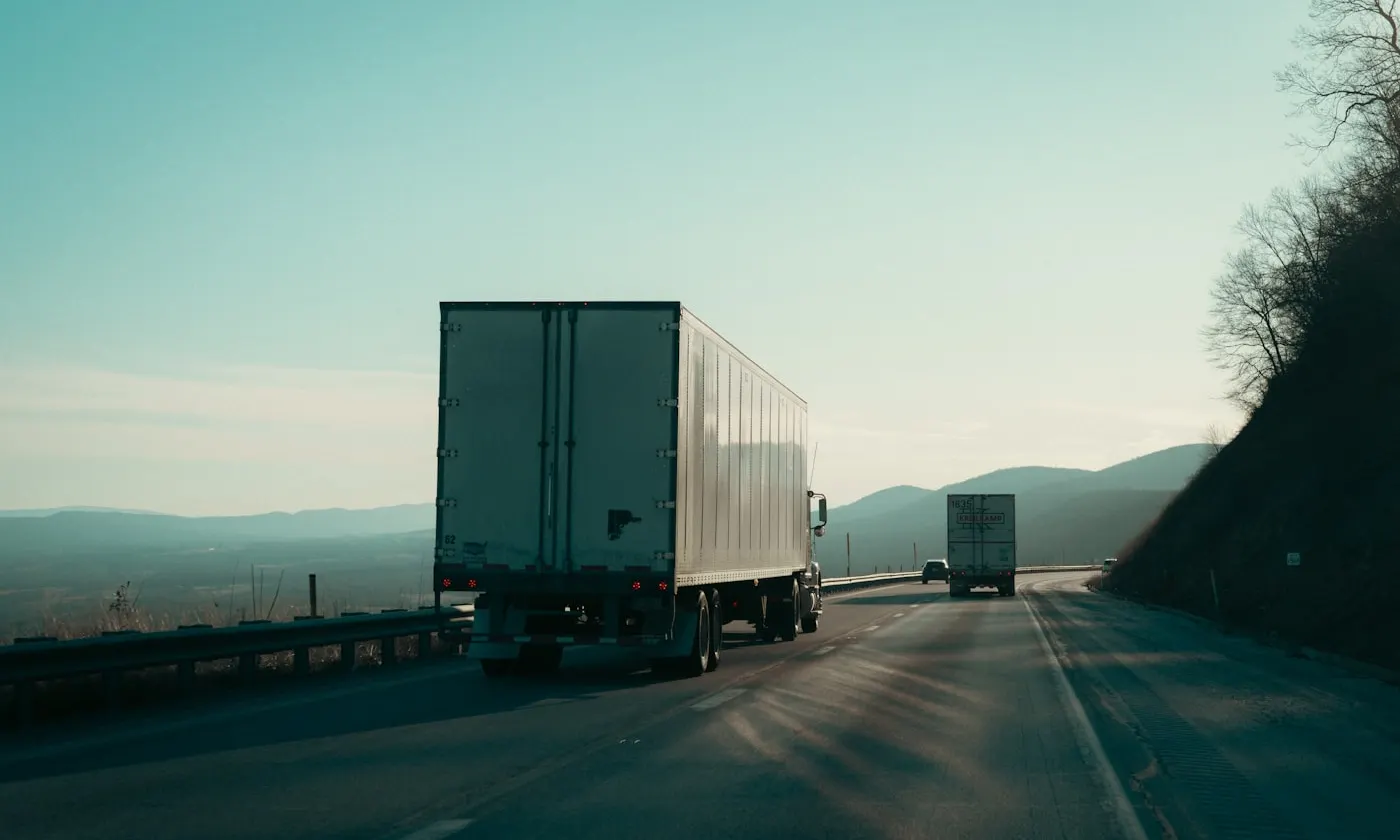
A loaded tractor trailer can weigh twenty times what a passenger car weighs. When one runs a light on Topanga Canyon Boulevard, drifts across a lane on the 118 or fails to stop in slowed traffic on the 5, the people in the smaller vehicle absorb almost all of the force. Injuries in these crashes tend to be more serious, and the claims that follow are more complicated than a two-car collision.
Manoukian Law Firm handles truck and commercial vehicle cases from its office in Chatsworth, in the middle of the San Fernando Valley’s freight and delivery traffic, and represents clients throughout California. The firm has handled claims against commercial trucking and bus companies and takes each case from the first call through litigation when that is what the case needs. Consultations are free and there is no fee unless the firm recovers for you.
What to do after a truck accident
- Get emergency medical care and stay with the treatment plan you are given. Truck crash injuries often involve the spine, the shoulders and the head, and some do not present clearly on the first day.
- If you are able, photograph the truck’s tractor and trailer, both license plates, the door lettering, and the USDOT number painted on the cab.
- Ask the responding officer for the report number and note whether CHP or a city police department handled the scene.
- Collect witness names and numbers before people leave.
- File a DMV SR-1 within ten days when there is an injury or over $1,000 in property damage (Vehicle Code 16000).
- Do not give a recorded statement to the trucking company or its insurer, and do not sign a release or a medical authorization they send you.
- Call a lawyer quickly so that a preservation letter goes out before records and vehicle data are lost.
Where truck crashes happen in the Valley
The Valley moves a great deal of freight for a place most people think of as residential. The 118 carries trucks between Simi Valley and the 210 through Chatsworth, Porter Ranch, Northridge and Granada Hills. The 405 and the 5 run north and south through Van Nuys, Sherman Oaks, Sylmar, San Fernando, Pacoima and Sun Valley, and the 101 crosses the south Valley through Woodland Hills, Tarzana, Encino and Sherman Oaks. Off the freeways, the industrial blocks along Nordhoff and Plummer in Chatsworth and Northridge, the warehouse and shop districts of Van Nuys, Pacoima and Canoga Park, the landfill traffic above Sylmar and the aggregate and recycling yards in Sun Valley all put heavy trucks on the same surface streets as school traffic and commuters.
Most of the commercial vehicle crashes the firm sees are not big rigs at all. They are delivery vans, box trucks, tow trucks, dump trucks, landscaping and construction trucks, and work vans driven by employees on the clock. The legal questions are the same: who employed the driver, who owned the vehicle, what insurance sits behind it, and what records the company kept.
On a Valley freeway the California Highway Patrol writes the report; the CHP West Valley office in Woodland Hills covers most of the freeway mileage on the west side of the Valley. On surface streets in the City of Los Angeles the report comes from the LAPD division for that neighborhood, such as Devonshire for Chatsworth, Northridge and Porter Ranch, Topanga for Canoga Park and Woodland Hills, and Mission for Sylmar and Pacoima. Simi Valley and San Fernando have their own police departments. Knowing which agency has the report, the body-camera footage and any dash-camera video is the first practical step in a truck case, and the firm requests those records immediately.
Truck crashes in Topanga and on Topanga Canyon Boulevard
Topanga is an unincorporated community in Los Angeles County. It is not part of the City of Los Angeles, and that changes who shows up after a crash and where the report lives. Topanga Canyon Boulevard is State Route 27, a Caltrans highway that runs from Chatsworth south through Woodland Hills, crosses the 101, and then drops through the canyon to Pacific Coast Highway. Old Topanga Canyon Road, a county-maintained road that joins the boulevard in the canyon, is narrow enough that the county has posted curve advisory signs along it.
The canyon stretch is a two-lane mountain road with blind S-curves, steep embankments and almost no shoulder. Delivery trucks, construction trucks and water trucks use it every day because there is no other route in. A box truck that crosses the center line on a curve, or a loaded dump truck that cannot stop on the downhill grade, leaves the driver of a car with very little room. Rollovers and head-on impacts are more common here than on a flat Valley street.
For a crash in unincorporated Topanga, the Los Angeles County Sheriff’s Department Malibu/Lost Hills Station lists Topanga among the communities it serves. On the state highway itself, the CHP West Valley office in Woodland Hills generally handles collisions; its patrol area includes Topanga Canyon and the two-lane county roads around it. In practice, either agency may respond, so the first task is to find out which one wrote the report and whether the other has any record of the call.
A canyon crash case depends on evidence that does not last. Skid marks fade within days, guardrail and embankment damage gets repaired, and dash-camera and in-cab video is overwritten on a schedule. The firm sends a preservation demand to the trucking company for the driver’s hours, dispatch records, maintenance files and any camera footage, and where the physical evidence matters, arranges for the scene and the vehicle to be documented before either changes.
Truck crashes in the City of San Fernando
The City of San Fernando is its own city, with its own police department, and it sits inside the northeast Valley with Los Angeles neighborhoods like Sylmar and Pacoima on its borders. Three freeways run along its edges: the 210 to the northeast, the 5 to the southwest and the 118 to the southeast. None of the interchanges are inside the city limits, but all of them are close, and the trucks that use them come through town on surface streets.
The city designates Truman Street, Brand Boulevard and Glenoaks Boulevard among its official truck routes, and San Fernando Road and Maclay Avenue carry much of the rest of the commercial traffic. Light industrial and warehouse uses are concentrated along First Street, and the rail line and the Sylmar/San Fernando Metrolink station sit just past the northwest boundary. The result is a small city with a steady stream of box trucks, flatbeds and tractor trailers sharing the road with local drivers.
On a city street the report comes from the San Fernando Police Department at 910 First Street, which is the primary law enforcement agency for the city. On the 5, the 118 or the 210, the CHP writes it. The nearest emergency care is Providence Holy Cross Medical Center in Mission Hills, a Level II trauma center, and most seriously injured people from a San Fernando crash are taken there.
Where a lawsuit is filed surprises people. Under Los Angeles Superior Court Local Rule 2.3(a)(1)(A), an unlimited civil personal injury case, meaning one seeking more than $35,000, is filed at the Stanley Mosk Courthouse downtown, not in the Valley. The court may later transfer the case to a courthouse closer to the parties and witnesses, such as Chatsworth or Van Nuys, but it does not start there. The San Fernando Courthouse does not take these injury filings at all. The firm handles the filing and the transfer request when one makes sense, and explains the details on the San Fernando page.
How these cases work in California
A truck case begins the same way any negligence case does. Someone owed a duty of reasonable care, did not meet it, and caused harm. What makes trucking different is the layer of federal and state safety regulation that sits above ordinary traffic law, and the number of parties who may share responsibility.
Interstate motor carriers are governed by the Federal Motor Carrier Safety Regulations, which set rules on driver hours of service, qualification and training, vehicle inspection and maintenance, cargo securement and drug and alcohol testing. Electronic logging devices record drive time. Engine control modules record speed, braking and throttle in the seconds before impact. Carriers keep maintenance files, dispatch records, driver qualification files and inspection reports. Those records tell a story that the police report alone cannot.
Responsibility is rarely limited to the driver. Depending on the facts, a claim may involve the motor carrier that employed or contracted with the driver, the company that owned the trailer, a shipper or loader whose cargo shifted, a maintenance contractor, or a parts manufacturer. A driver may be an employee, in which case the carrier is generally responsible for negligence committed in the course of that work, or a contractor with a separate policy.
The upside for injured people is that commercial policies usually carry far higher limits than the 30/60/15 minimum that applies to private cars under Vehicle Code 16056. The difficulty is that trucking companies and their insurers typically have investigators working within hours of a crash, while the injured person is still in the hospital.
California’s pure comparative negligence rule from Li v. Yellow Cab (1975) applies here too. Being assigned part of the fault reduces recovery by that percentage rather than ending the claim.
How Manoukian Law Firm handles truck accident cases
Speed matters more in trucking than in almost any other case type. Some electronic data overwrites itself in a matter of days, and carriers are only required to retain certain records for limited periods. The first step is a written evidence preservation demand covering the electronic logging data, the engine control module download, the driver’s qualification and hours records, dispatch and trip documents, maintenance and inspection files, drug and alcohol testing records, and any in-cab or forward-facing camera footage. Where the vehicle needs to be examined, the firm arranges inspection before it goes back into service.
From there the case is built on the documents. Hours of service violations, deferred brake maintenance, a driver hired despite a disqualifying record, or cargo loaded past a safe limit are each provable through the carrier’s own files. When the physical evidence requires it, an accident reconstruction expert and a trucking safety expert are retained.
Medical documentation is developed alongside the liability work: treating physicians, imaging, specialist referrals, and where a head injury is involved, neuropsychological evaluation. See brain injuries. Communication with the carrier and its insurance company goes through the office. Every case is prepared as though it will be tried.
In one of the firm’s commercial vehicle cases, a client with catastrophic injuries was struck by a delivery driver who was on the job. The delivery company paid its full $1,000,000 policy and the corporate parent refused to add anything, calling the driver an independent contractor. The firm pursued the parent company directly and recovered an additional $800,000, for $1,800,000 in total. That is the pattern in these cases: the first policy is rarely the only one.
Crashes involving buses and public transit agencies follow a different set of rules, and a standard passenger vehicle collision is covered on the car accident page. If the crash happened near the office, the Chatsworth, Northridge, Reseda and Simi Valley pages explain how cases from each community are handled.
What can be recovered
California allows recovery of economic and non-economic damages. On the economic side that means emergency treatment, hospitalization, surgery, rehabilitation, prescriptions, assistive equipment and home modifications, lost wages, reduced future earning capacity, and the projected cost of future medical care. Under Howell v. Hamilton Meats (2011), medical damages are the amounts actually paid or owed, so accurate billing records matter.
Non-economic damages address pain, physical limitation, scarring, emotional harm and loss of the activities that made up your life before the crash. In catastrophic cases, life care planning and vocational analysis are used to show what long-term care and lost work will actually cost.
If a family member did not survive, Code of Civil Procedure 377.60 sets out who may bring a wrongful death claim, with a separate survival action under section 377.30 for the losses the person suffered before death.
Deadlines
The general California deadline for a personal injury lawsuit is two years from the date of injury under Code of Civil Procedure 335.1. If a public entity is involved, for example a municipal truck or a hazardous road condition, a written government claim must be filed within six months under Government Code 911.2, followed by a shorter lawsuit deadline after the claim is rejected.
Evidence deadlines are tighter than legal ones. The practical window for preserving electronic data and inspecting a vehicle can be days, not months.
Case results
Our client suffered catastrophic injuries after being struck by a commercial delivery driver who was on the job.
Our client developed ongoing neck pain after a multi-vehicle rear-end collision on the highway, requiring pain-management treatment. The case resolved for $400,000.
The other side valued our client's injuries at $5,000 to $10,000 and called it a “soft impact.” Our client was the third car struck in a chain-reaction collision. We filed suit and recovered $275,000.
Past results do not guarantee a similar outcome.
Frequently asked questions
Why hire a lawyer instead of dealing with the trucking company directly?
Trucking companies have rapid response procedures and legal representation from the day of the crash. Their early offers are usually made before anyone knows the full medical picture, and accepting one closes the claim permanently, including for treatment you have not had yet.
Who can be held responsible besides the driver?
Depending on the facts, the motor carrier, a trailer owner, a shipper or loading company, a maintenance contractor or a parts manufacturer may share responsibility. Identifying every possible defendant early also identifies every available policy.
What if I was partly at fault?
California reduces recovery by your share of fault rather than barring it. The evidence in trucking cases, including the electronic data, frequently shows the picture differently than a roadside assessment did.
What does it cost to hire the firm?
Consultations are free, and truck cases are handled on a contingency fee with no fee unless the firm recovers for you. Case costs and the fee arrangement are explained in writing before you sign.
Do you take truck cases outside the San Fernando Valley?
Yes. The office is in Chatsworth and most clients come from the Valley, Santa Clarita and Simi Valley, but the firm represents people injured in truck crashes anywhere in California and meets by phone or video when travel is difficult.
How long do these cases take?
Truck cases usually take longer than ordinary collision claims because of the volume of records involved and the number of parties. Cases are typically not ready to evaluate until treating doctors can describe your long-term condition.
Talk with an attorney
If you or someone in your family was hurt in a crash with a commercial truck, delivery van or work vehicle in the San Fernando Valley or anywhere in California, call Manoukian Law Firm at (818) 818-5031. Consultations are free, and there is no fee unless the firm recovers for you. The office serves clients in English, Spanish and Armenian and can meet by phone, by video or at the hospital. You can also read about the firm or contact the office.
Serving clients across California
The office is on Topanga Canyon Boulevard in Chatsworth, and the firm represents injured people throughout California. If you cannot travel, we meet by phone, by video or in the hospital.
Most of the firm’s clients live and drive in the San Fernando Valley. See how cases are handled in Chatsworth, Northridge, Reseda, Canoga Park, San Fernando and Simi Valley, or browse every community the firm serves.