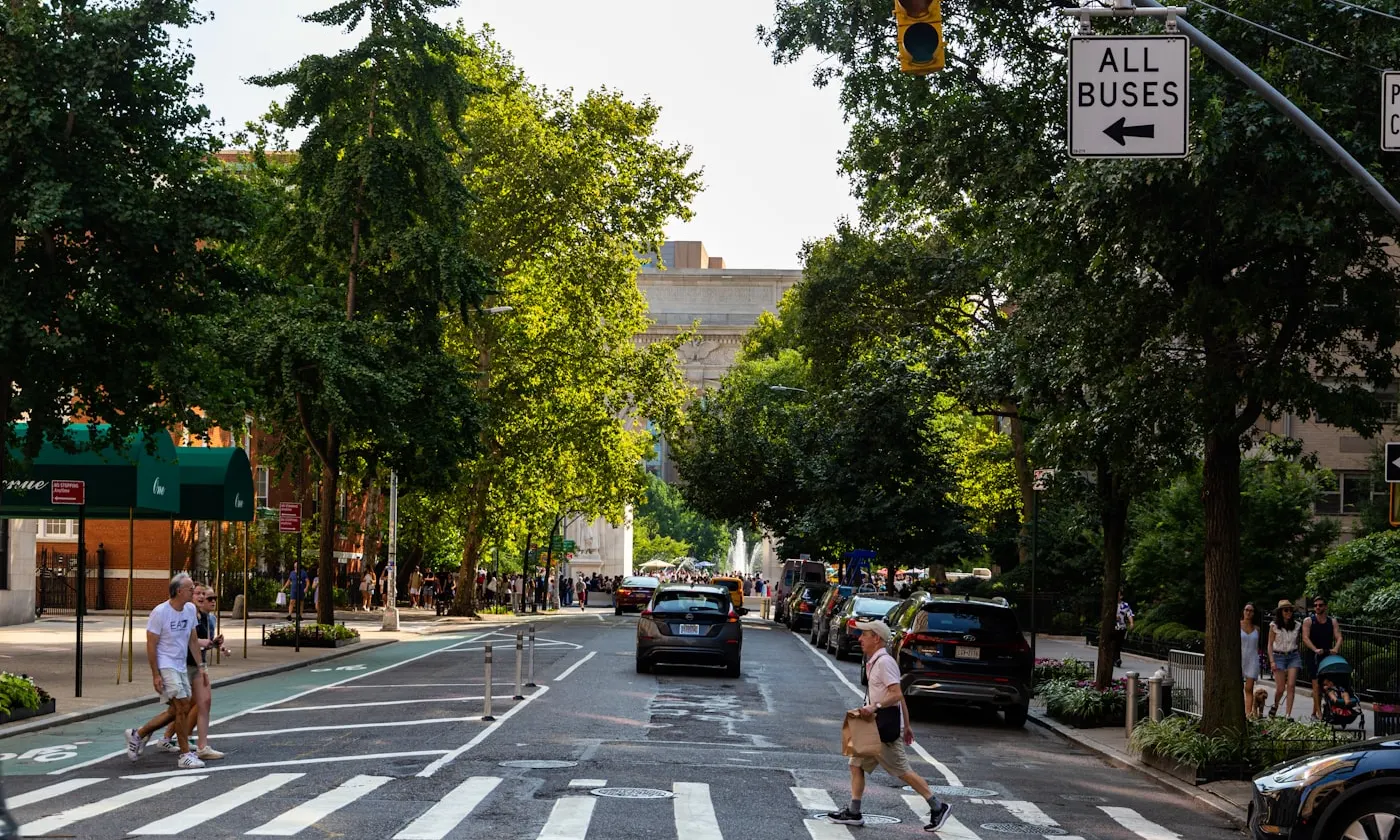
A person crossing the street has nothing between them and a vehicle. Injuries in these collisions tend to be serious even at moderate speeds: broken legs and pelvises, head injuries, internal injuries and long recoveries. Many of these crashes happen at intersections in daylight, and many happen where a driver was turning and simply did not look.
Manoukian Law Firm handles California pedestrian injury cases from an office in Chatsworth. Every case is prepared as though it will be tried. Consultations are free and there is no fee unless the firm recovers for you.
What to do after a pedestrian accident
- Accept the ambulance and go to the hospital. Injuries to the head, hips and internal organs are not always obvious at the scene.
- If you are able, or if someone with you is able, photograph exactly where you were standing, the crosswalk or intersection, the vehicle and its position, and the traffic controls.
- Get the driver’s name, license, insurance information and license plate.
- Ask bystanders for names and phone numbers. Independent witnesses often decide these cases.
- Ask the responding officer for the report number and the agency that took the report.
- Do not tell the driver or an insurance company that you are fine, and do not give a recorded statement before speaking with a lawyer.
- Keep the clothing and shoes you were wearing, and photograph your injuries as they change over the following weeks.
How these cases work in California
A pedestrian claim is a negligence claim, and the central question is usually where the person was walking and what the driver did or failed to do. California law on this point is clear. Under Vehicle Code 21950, a driver must yield the right of way to a pedestrian crossing within a marked crosswalk or within an unmarked crosswalk at an intersection. The same section requires drivers to exercise due care for the safety of any pedestrian and to reduce speed or take other action needed for safety.
The obligations run both ways. A pedestrian may not suddenly leave a curb or other place of safety and walk or run into the path of a vehicle that is close enough to be an immediate hazard. Insurers lean on that language, and it is why the investigation has to establish the distances and the timing rather than leaving them open.
An unmarked crosswalk is often the point that decides a case. At most intersections, the crossing area exists whether or not paint is on the roadway. A driver who assumes a pedestrian was jaywalking because there were no lines may be mistaken about the law.
Even when a pedestrian bears some responsibility, California uses pure comparative negligence under Li v. Yellow Cab (1975). Recovery is reduced by the percentage of fault assigned, not barred.
Coverage frequently becomes the practical issue. The state minimum since January 1, 2025 is 30/60/15 under Vehicle Code 16056, and pedestrian injuries routinely cost more than that. A pedestrian’s own auto policy can matter: uninsured and underinsured motorist coverage, which insurers must offer under Insurance Code 11580.2, often covers a household member who was struck while walking. Medical damages are the amounts actually paid or owed under Howell v. Hamilton Meats (2011).
How Manoukian Law Firm handles pedestrian cases
These cases are won or lost on the details of the location. The firm obtains the traffic collision report, then goes to the scene: crosswalk markings, curb ramps, signal timing, sightlines from the driver’s approach, lighting conditions at the time of day the collision happened, and any obstruction that blocked the view. Businesses, apartment buildings and residences near intersections often have cameras, and that footage is typically overwritten within days, so requests go out immediately.
Where the sequence is disputed, a reconstruction expert works from the vehicle damage, the resting positions and the physical evidence to establish speed and timing. If a roadway condition contributed, a missing signal, an obscured crossing or a defective sidewalk, the firm evaluates whether a public entity claim is required. See sidewalk accidents, which involve the same government claim rules.
Medical documentation is developed through treating physicians: orthopedic care, imaging, surgical records and rehabilitation. Head injuries deserve particular attention because symptoms can appear days later and are easy to attribute to something else. See brain injuries. Insurance communication runs through the office, and every case is prepared as though it will be tried. If the vehicle involved was a rideshare car or a commercial truck, different coverage applies. See Uber and Lyft accidents and truck accidents.
What can be recovered
Economic damages include ambulance transport, emergency and trauma care, surgery, hardware, physical therapy, prescriptions, home health care, assistive equipment, home modifications, future medical treatment, lost income and reduced earning capacity when an injury limits the work you can do.
Non-economic damages address pain, permanent limitation, scarring, emotional harm and the ordinary activities that a long orthopedic recovery takes away. In serious cases, a life care plan and a vocational analysis are used to show what future care and lost work will actually cost, rather than guessing at a number.
When a pedestrian does not survive, Code of Civil Procedure 377.60 sets out which family members may bring a wrongful death claim, and section 377.30 provides for a separate survival action.
Deadlines
The general California deadline to file a personal injury lawsuit is two years from the date of injury under Code of Civil Procedure 335.1. If a government entity is responsible, including a city or county responsible for a roadway, a crossing or a signal, a written claim must be presented within six months under Government Code 911.2, and a shorter lawsuit deadline follows a rejection. Six months goes quickly when someone is still in treatment, which is why these claims should be reviewed early.
Case results
Our client suffered catastrophic injuries after being struck by a commercial delivery driver who was on the job.
Our client developed ongoing neck pain after a multi-vehicle rear-end collision on the highway, requiring pain-management treatment. The case resolved for $400,000.
The other side valued our client's injuries at $5,000 to $10,000 and called it a “soft impact.” Our client was the third car struck in a chain-reaction collision. We filed suit and recovered $275,000.
Past results do not guarantee a similar outcome.
Frequently asked questions
The intersection had no painted crosswalk. Does that hurt my case?
Not by itself. Vehicle Code 21950 covers unmarked crosswalks at intersections as well as marked ones. Whether the crossing area existed at that location is a factual question worth investigating before anyone accepts a driver’s version of it.
What if I was crossing outside a crosswalk?
You may still have a claim. Drivers must exercise due care toward pedestrians, and pure comparative negligence reduces recovery by your share of fault rather than eliminating it. The percentages depend on the evidence, including speed, lighting and whether the driver was distracted.
The driver left the scene. Do I have any options?
Possibly. Uninsured motorist coverage on your own policy or a household policy can apply to a hit-and-run, and camera footage and police investigation sometimes identify the vehicle. Report it to law enforcement quickly and preserve everything you have.
What if I was hit in a parking lot?
Those claims are handled the same way, and the property owner’s maintenance, lighting and traffic layout may also be relevant. Parking lot collisions often have useful surveillance video, which is another reason to move quickly.
What does it cost to hire the firm?
Consultations are free and these cases are handled on a contingency fee. There is no fee unless the firm recovers for you, and the fee and cost terms are explained in writing before you sign anything.
Talk with an attorney
If you or a family member was struck while walking anywhere in California, call Manoukian Law Firm at (818) 818-5031. Consultations are free, and there is no fee unless the firm recovers for you. The office serves clients in English, Spanish and Armenian, and can meet by phone, by video or in the hospital when travel is difficult. You can also read about the firm or contact the office.
Serving clients across California
The office is on Topanga Canyon Boulevard in Chatsworth, and the firm represents injured people throughout California. If you cannot travel, we meet by phone, by video or in the hospital.
Most of the firm’s clients live and drive in the San Fernando Valley. See how cases are handled in Chatsworth, Northridge, Reseda, Canoga Park, San Fernando and Simi Valley, or browse every community the firm serves.