When a car with driver assistance technology crashes, the starting point in California is that the human behind the wheel is responsible. Automatic emergency braking, lane keeping assist, adaptive cruise control and blind spot warning are all classified as driver assistance, not automated driving. The driver is required to remain engaged and in control. If they were watching a screen instead of the road because they assumed the car would stop itself, that is ordinary negligence and they are liable for the harm.
The second question is the one most people do not think to ask. If the system was engaged and it failed to do what it was designed and advertised to do, the vehicle or component manufacturer may also be liable under product liability law, on a design defect or failure to warn theory. Those two answers are not mutually exclusive. A single crash can produce a negligence claim against the driver and a product claim against the manufacturer, with a jury apportioning fault between them. Which of those claims exists in your case is not something you can tell from the police report. It is decided by data stored in the vehicle, and that data does not wait around.
What these systems actually do, and what they do not
The terminology is a mess, largely because marketing names and engineering categories do not match. It helps to separate them.
Warning systems tell the driver something and take no action: forward collision warning, blind spot monitoring, lane departure warning. Intervening systems act on the vehicle: automatic emergency braking, lane keeping assist that applies steering torque, adaptive cruise control that manages speed and following distance. Combined systems bundle steering and speed control together and are the ones most often mistaken for self-driving.
None of these currently sold to consumers relieve the driver of responsibility for the vehicle. The National Highway Traffic Safety Administration publishes plain descriptions of what each feature does and its limits, and the owner’s manuals themselves usually contain pages of conditions under which the system will not work: heavy rain, low sun angle, faded lane markings, cross traffic, stopped vehicles at speed, pedestrians at night, motorcycles that are narrow enough to be missed by a radar return.
That last category matters more than people realize. Systems tuned to detect the back of a car do not always detect a motorcycle between lanes, a bicycle at the edge of a lane, or a person crossing outside a marked crosswalk at night. When a driver has come to trust the system on a freeway commute, that gap in detection is precisely where the crash happens.
The two sources of liability
The driver
Nothing in California law changes because the car had technology in it. A driver owes a duty of ordinary care under Civil Code 1714 and the Vehicle Code applies as it always did. Reliance on a driver assistance feature is not a defense to inattention. If anything, in the files we handle it tends to cut the other way: a driver who admits they were not watching because they expected the car to brake has effectively conceded the breach.
California uses pure comparative negligence, so fault is divided by percentage rather than being all or nothing. A driver who was 70 percent at fault does not escape liability because a system was 30 percent at fault, and an injured person whose own conduct contributed still recovers, reduced by their share.
The manufacturer
A product liability claim in California can rest on a design defect, a manufacturing defect, or a failure to warn. In an ADAS case, design defect and failure to warn are the realistic theories.
Design defect looks at whether the system as designed performed as safely as an ordinary consumer would expect, or whether the risks of the design outweigh its benefits. Failure to warn looks at whether the manufacturer adequately communicated the limits of the system to the person using it, including whether the way the feature was named and marketed created an expectation the system could not meet.
There is a further wrinkle in these cases that traditional auto claims do not have: the system may have changed after the car was sold. Vehicles that receive software updates over the air are not the same product they were on the delivery date, and establishing which software version was running at the time of the crash becomes part of the case.
We do not tell clients that any particular manufacturer has been found liable for any particular system, and you should be skeptical of a firm that does. What we can say is that the theory is available under settled California product law, and whether it applies is an evidence question.
The evidence that decides it, and why speed matters
Almost every meaningful fact in an ADAS case lives in electronic form, and most of it is under someone else’s control.
Event data recorder. Federally mandated EDRs capture a short window around a crash: speed, brake application, throttle, steering input, seat belt status, delta-v. In an assisted-driving case, the critical question is often whether the brakes were applied by the human or by the system, and how many milliseconds before impact.
ADAS module logs. Separate from the EDR, the driver assistance modules themselves often log whether each feature was engaged, whether it issued a visual or audible warning, whether it detected an object, and whether the driver had hands on the wheel or responded to a prompt. This is where a case is won or lost.
Camera and radar data. Some systems retain short video or object detection records. Some do not, or overwrite quickly.
Telematics and connected car data. Many vehicles transmit trip data to the manufacturer’s servers. That data exists outside the car and is preserved or destroyed on the manufacturer’s schedule, not yours.
Infotainment and phone data. Pairing records, call and text activity, and app usage bear directly on the driver’s attention.
All of this is perishable. Vehicles get repaired, totaled, sold at salvage auction and crushed. Modules get replaced. Logs roll over. Phone records get deleted. In these cases we send evidence preservation letters within days, to the driver, the insurer, the repair facility, the salvage yard and the manufacturer, identifying the specific modules and data streams that must not be altered. If a vehicle has already been released, we try to locate it and inspect it before it is dismantled.
That urgency is the single biggest practical difference between an ADAS case and a routine car accident claim. A person who waits six months to call a lawyer usually still has a viable negligence claim against the driver. The product claim may already be gone, not because the law barred it, but because the evidence stopped existing.
Commercial vehicles and rideshare
Heavy trucks increasingly carry collision mitigation and lane departure systems, and they carry far more recorded data than passenger cars: electronic logging device records, engine control module data, forward-facing and driver-facing camera systems used by fleets. In a truck accident, the Federal Motor Carrier Safety Regulations governing hours of service and maintenance sit alongside the ADAS questions, and the maintenance records will show whether a sensor was flagged and ignored.
Rideshare vehicles raise a different issue. A driver working through an app carries commercial coverage under Public Utilities Code 5433 that varies with the period of the trip, and the vehicle is usually the driver’s own. A crash involving assisted driving in an Uber or Lyft vehicle can involve the driver, the vehicle manufacturer and the rideshare company’s insurer at the same time.
What to do after a crash involving these systems
- Get medical care and report the crash. If there was injury or more than $1,000 in property damage, the DMV requires an SR-1 within 10 days under Vehicle Code 16000.
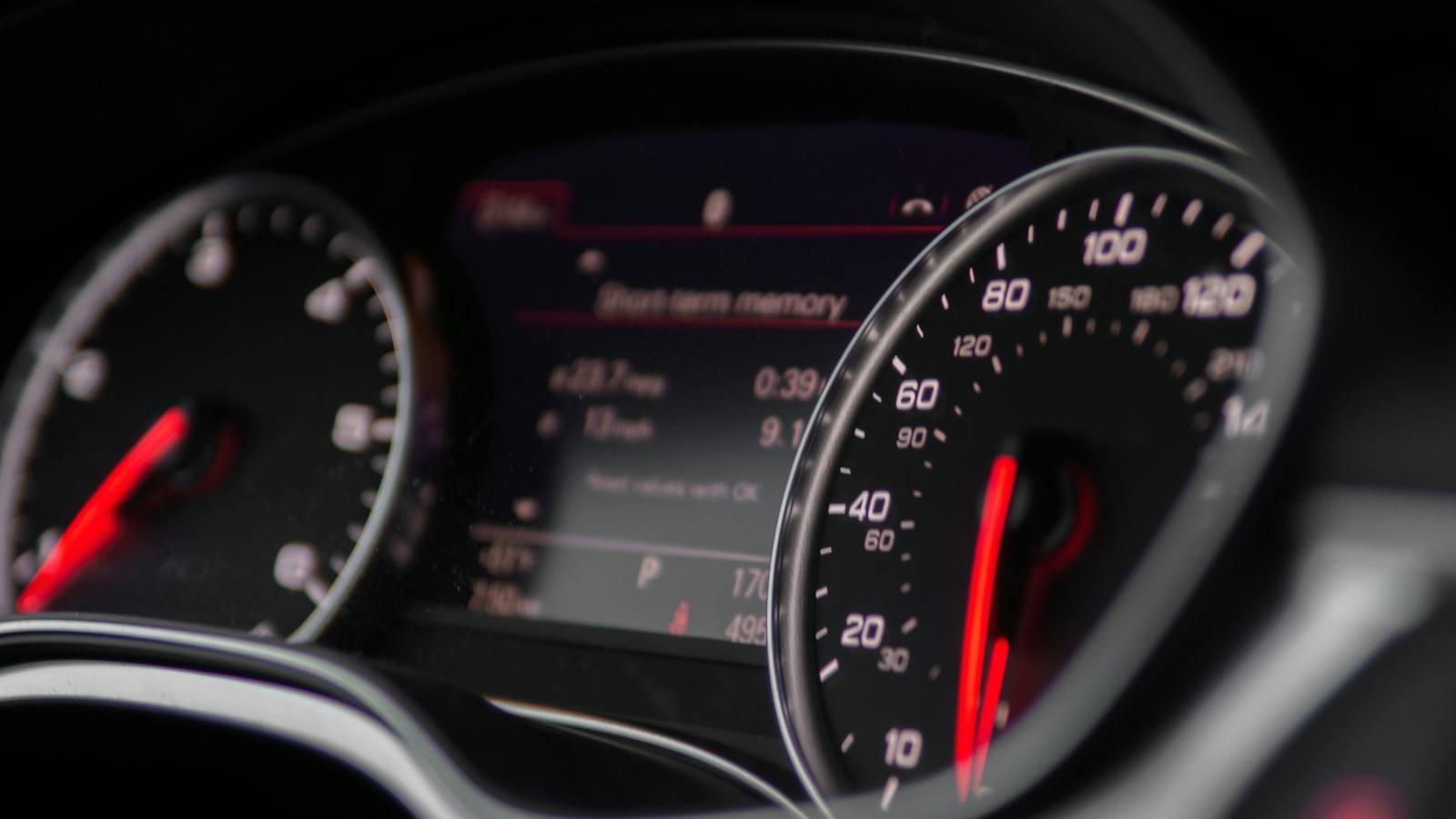
- Photograph the dashboard and center screen if it is safe to do so. Warning messages and system status displays disappear when the vehicle is powered down.
- Write down what the car did in the seconds before impact. Did it warn you? Did it brake? Did it steer? Did a feature disengage? Did you hear a chime?
- Do not let the vehicle be repaired, sold or salvaged before it has been inspected, even if the insurer is pressing you to release it.
- Note whether the other driver said anything at the scene about the car braking or not braking. Statements like that are made constantly and forgotten within a week.
- Talk to a lawyer quickly, specifically about preserving electronic data.
What can be recovered
The damages are the same as in any California injury case: medical care already received and reasonably needed in the future, lost income and lost earning capacity, and non-economic harm including pain, physical impairment and the effect on daily life. Where a product claim is viable, it adds a defendant with substantial coverage, which matters most when the at-fault driver carries minimum limits. Since January 1, 2025 the state minimum is 30/60/15 under Vehicle Code 16056, which does not go far against a serious injury.
The personal injury deadline is two years from the injury under Code of Civil Procedure 335.1. Product claims arising from the same crash generally run on the same clock, but the practical deadline for the evidence is measured in weeks.
Key points
- Driver assistance features do not transfer legal responsibility away from the human driver, and inattention while relying on them is negligence.
- A system that failed to perform as designed can support a product liability claim against the manufacturer on design defect or failure to warn theories.
- Both claims can exist in one case, with California’s pure comparative negligence dividing fault by percentage.
- The decisive evidence is electronic: event data recorder output, ADAS module logs, telematics and phone records, all of which are perishable.
- Preservation letters and a vehicle inspection need to happen within days, not months.
- The two-year deadline under Code of Civil Procedure 335.1 applies, but waiting usually destroys the product claim long before it expires.
Frequently asked questions
If my car’s automatic braking did not stop the crash, is the manufacturer automatically liable?
No. A system failing to prevent a crash is not the same as a defect. These features are designed with known limits, and a manufacturer is not liable simply because the technology did not save the day. The claim requires evidence that the design was unreasonably dangerous or that the warnings about its limits were inadequate.
Can the other driver blame their car for the crash?
They can try, and it does not usually help them. A driver remains responsible for the safe operation of the vehicle, so blaming the system tends to establish that they were not paying attention. What it does do is point toward a second defendant, which is why we treat that statement as a lead rather than a defense.
Who owns the data in my car?
The vehicle data belongs generally to the vehicle owner, but access is another matter, since retrieving module data usually requires manufacturer tools and cooperation. Telematics data transmitted to the manufacturer sits on their servers under their retention policies, which is why a preservation demand directed at the manufacturer early is worth sending.
Does having driver assistance make my own insurance claim harder?
It can, in that an insurer may argue you over-relied on the system or ignored a warning it issued. The recorded data cuts both ways, and in many files it is what proves the client was attentive and the other driver was not.
If you were hurt in a crash involving a vehicle with driver assistance technology, the useful thing you can do this week is make sure the evidence still exists. Call Manoukian Law Firm at (818) 818-5031 for a free consultation, or contact us here. We work throughout California from our office in Chatsworth, and there is no fee unless we win.