There is nothing a lawyer can do that undoes the loss of a husband, a wife, a parent, or a child. What the law can do is place responsibility where it belongs and provide for the people who depended on the person who died. That is a narrow kind of help, but for many families it is a real one, especially when the household income is suddenly gone and the bills continue to arrive.
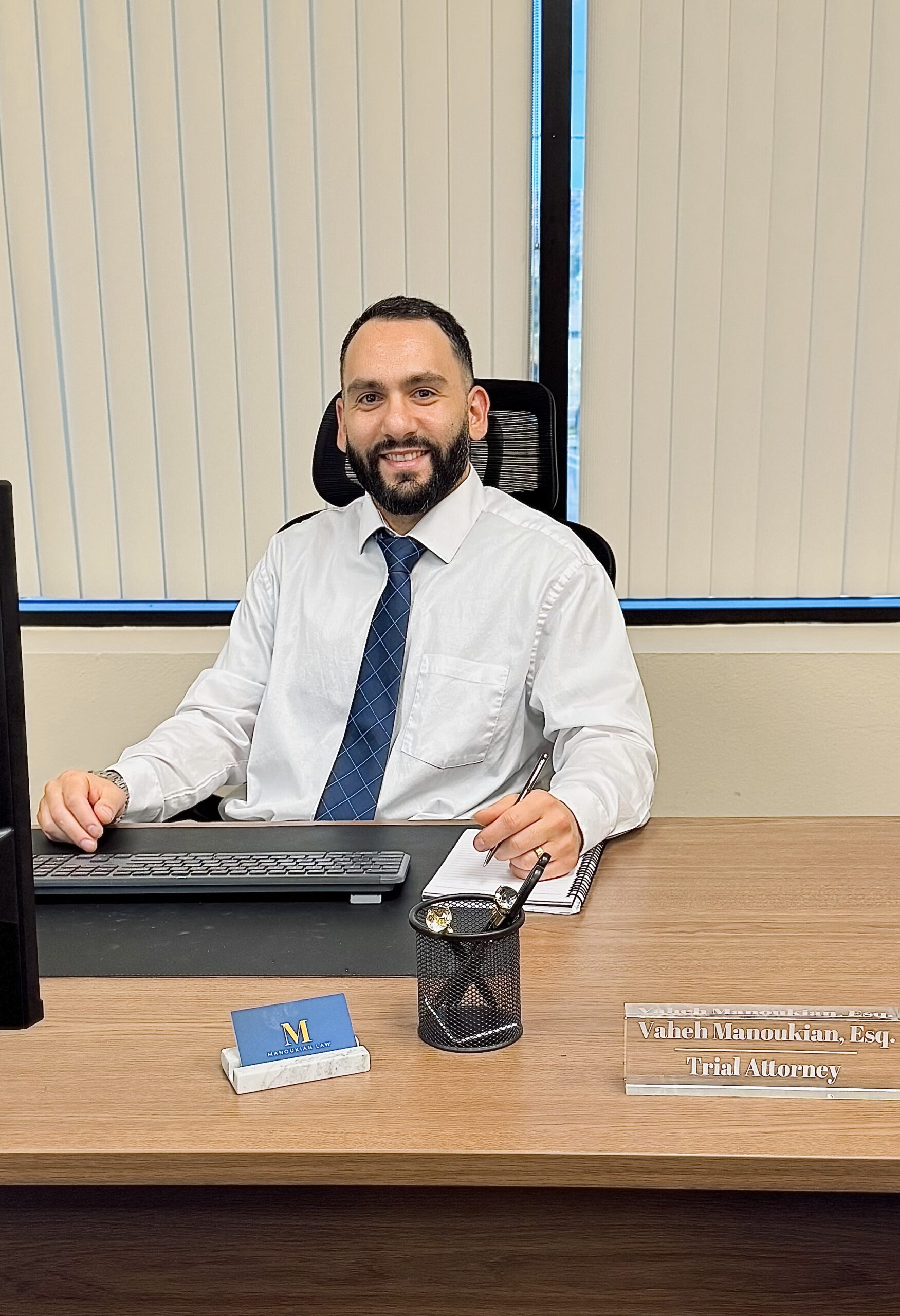
Manoukian Law Firm represents families throughout California from the firm’s office in Chatsworth. Much of the firm’s early work in these cases involves shielding a family from the parts of the process they should not have to manage. You are not expected to have answers today. If you would like to talk it through, we will listen first and explain what your options look like whenever you are ready.
What to do after a death in the family
These steps are practical rather than urgent, and a relative or friend can handle them.
- Take care of your family first. Everything else can be arranged around that.
- Ask that nothing involved in the incident be repaired, sold, or discarded, including a vehicle, a bicycle, equipment, or clothing.
- Keep the paperwork that arrives in one place: the death certificate, the police or coroner’s report number, medical bills, and funeral expenses.
- Write down the names and numbers of anyone who witnessed the incident or who called you about it, while it is easy to remember.
- Let a lawyer respond to the insurance companies. A family should not be answering recorded questions about how a loved one died.
- Do not sign a release or accept an early payment without understanding what it closes.
How these cases work in California
A wrongful death claim belongs to the surviving family members, not to the person who died. Code of Civil Procedure 377.60 sets out who may bring it: the surviving spouse, a domestic partner, and the children, and if there are none, those who would be entitled to inherit, along with certain people who were financially dependent on the decedent, including a putative spouse, stepchildren, and parents in some circumstances. Where several eligible family members exist, California generally treats the claim as a single action so that a family is not divided into competing lawsuits.
Alongside it sits a separate claim called a survival action, under Code of Civil Procedure 377.30. That claim belongs to the estate and covers the losses the person suffered between the injury and death, such as medical expenses and lost earnings during that period. The two claims are usually brought together, and understanding which damages belong to which claim matters when the case is resolved.
Liability is proven the same way as in any injury case. If the death resulted from a collision, a dangerous property condition, or a preventable failure by a business or a public entity, the family must show that the responsible party failed to use reasonable care and that the failure caused the death. California’s pure comparative negligence rule from Li v. Yellow Cab (1975) applies here as well: if the person who died is found to bear some share of responsibility, the recovery is reduced by that share rather than barred. Families are sometimes told early that their loved one was at fault. That is an opinion offered before the evidence is developed, and it is often incomplete.
Where a public entity is involved, for example a transit vehicle, a government-owned road, or a public facility, additional procedural requirements apply, and we describe those in the deadlines section below.
How Manoukian Law Firm handles wrongful death cases
The first work is preserving what can still be recovered. Surveillance video, vehicle event data, employer records, maintenance logs, and cell phone data are commonly lost within weeks, so we send preservation letters and, where necessary, move for court orders to secure them. We obtain the traffic collision or incident report, the coroner’s file, and the medical records from the last treatment, and we retain reconstruction or engineering experts where the mechanism of the death is disputed.
We also handle the parts of the process families find hardest: dealing with the insurance companies, coordinating with probate counsel when an estate must be opened for the survival claim, resolving hospital liens and health plan reimbursement claims, and identifying every policy that may apply, which often includes coverage the family did not know existed.
Presenting the loss itself requires care. A wrongful death claim asks a jury to understand what a person meant to their family, and that is done through the people who knew them: their work, their role in the household, what an ordinary week looked like. We take time with families on this, at their pace, and no one is put in front of a camera or a deposition unprepared. San Fernando Valley cases are generally heard in the Los Angeles Superior Court’s North Valley district in Chatsworth or Northwest district in Van Nuys.
What can be recovered
California law allows the surviving family to recover the financial support the person would have provided over their lifetime, the loss of gifts or benefits the survivors would have expected, funeral and burial expenses, and the reasonable value of household services the person performed. These are calculated with the help of an economist in most cases.
The law also recognizes non-economic losses: the loss of the person’s love, companionship, comfort, care, moral support, and guidance, and for a spouse or partner the loss of the intimate relationship. A wrongful death claim does not include the family’s own grief or the pain the person suffered before death, though that suffering may belong to the separate survival claim, which also covers medical expenses and lost earnings between the injury and the death.
We make no predictions about amounts. What we can do is document these losses fully and present them with respect.
Deadlines
A California wrongful death action generally must be filed within two years of the death (Code Civ. Proc. 335.1, applied through CCP 377.60). If a government entity may be responsible, a written claim must first be presented to that entity within six months of the death (Gov. Code 911.2), and a shorter deadline to file suit follows if the claim is rejected. A survival action under CCP 377.30 has its own timing rules tied to the underlying injury.
We mention these dates so that you know they exist, not to hurry you. Many families call months after a loss, and that is often the right time for them. If you would like us to look at the timing in your particular situation without any commitment, we are glad to do that.
Case results
Our client suffered catastrophic injuries after being struck by a commercial delivery driver who was on the job.
Our client developed ongoing neck pain after a multi-vehicle rear-end collision on the highway, requiring pain-management treatment. The case resolved for $400,000.
The other side valued our client's injuries at $5,000 to $10,000 and called it a “soft impact.” Our client was the third car struck in a chain-reaction collision. We filed suit and recovered $275,000.
Past results do not guarantee a similar outcome.
Frequently asked questions
Who in the family is allowed to bring the claim?
Code of Civil Procedure 377.60 lists a surviving spouse or domestic partner and the children first, then those who would inherit if there is no spouse or child, along with certain financially dependent family members. Where more than one person qualifies, the claim is generally brought as one action rather than several, and we can explain how that works in your family’s circumstances.
What if the person who died also had some responsibility?
The claim is not barred. Under California’s pure comparative negligence rule, any share of fault assigned to the person who died reduces the recovery proportionally. Early assumptions about fault are often revised once the evidence is developed.
Do we have to go to court?
Many wrongful death claims resolve without a trial. The case is still prepared as though it will be tried, because that is what makes a serious resolution possible. If the case does go to trial, we prepare the family carefully and no one is asked to testify without knowing what to expect.
Is there a cost to speak with the firm?
No. The consultation is free, wrongful death cases are handled on a contingency fee, and there is no fee unless we win. Costs of the case are advanced by the firm.
What if our loved one died in a collision with a commercial vehicle or a bus?
Those cases involve additional records, federal safety regulations for trucking, and in the case of public transit a six-month claim requirement. We handle them, and you can read more on our Truck Accidents and Bus Accidents pages.
If your family has lost someone and you would like to understand your options, call Manoukian Law Firm at (818) 818-5031 whenever you are ready. We speak English, Spanish and Armenian, and we will meet you by phone or by video if that is easier than coming to the office. You can also reach us through our contact page, read more about the firm, or see related practice pages for Car Accidents, Pedestrian Accidents, and Brain Injuries.
Serving clients across California
The office is on Topanga Canyon Boulevard in Chatsworth, and the firm represents injured people throughout California. If you cannot travel, we meet by phone, by video or in the hospital.
Most of the firm’s clients live and drive in the San Fernando Valley. See how cases are handled in Chatsworth, Northridge, Reseda, Canoga Park, San Fernando and Simi Valley, or browse every community the firm serves.