A rear-end crash on Nordhoff Street or Devonshire Street produces a claim that moves in a fixed order. The LAPD writes the report, usually through the Devonshire Community Police Station on Etiwanda Avenue. You get examined the same day at Northridge Hospital Medical Center on Roscoe Boulevard or an urgent care. Within ten days you file the DMV SR-1 if anyone was hurt or the damage passed $1,000. You report the crash to your own insurance company, and the driver’s insurer opens a file and calls you for a recorded statement, which you decline. Then the medical treatment runs its course, the records are gathered, and a demand goes out. Each step has an office, a form or a deadline attached to it, and this guide takes them in order.
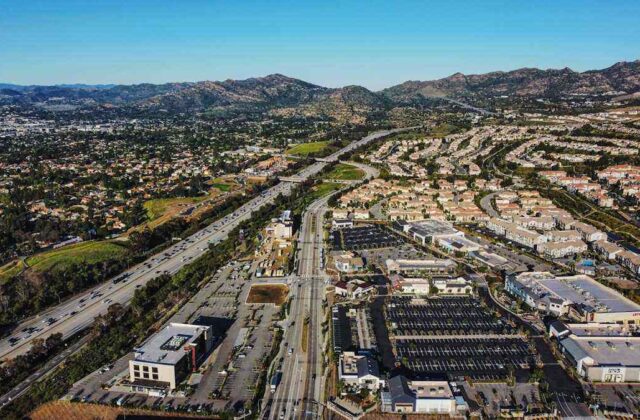
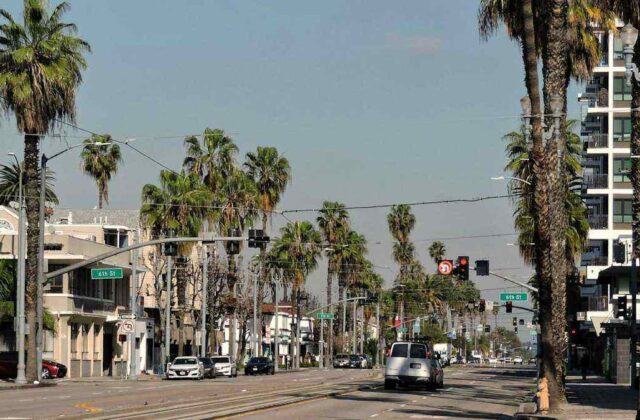
Rear-end crashes are common in Northridge because of how the neighborhood is built. Nordhoff carries traffic past California State University, Northridge at 18111 Nordhoff Street, Tampa Avenue feeds the Northridge Fashion Center at 9301 Tampa Avenue, and Devonshire, Reseda Boulevard, Balboa Boulevard and Zelzah Avenue have long signal spacing that lets speeds rise before a light turns. The car in front stops for a yellow or a left-turning driver, and the car behind does not. What follows is the same for a bumper tap as it is for a crash that totals a car.
Step one: the scene
If the car still moves and nobody is badly hurt, get it out of the lane. Then call 911 even when the damage looks small. A low-speed rear-end crash can injure the neck and back with almost no visible damage to either car, and the officer’s report is the first thing every insurance company reads.
While you wait for the officer:
- Photograph both vehicles from all four corners, the resting positions, the signal, and the road surface behind the other car, where skid marks show whether the driver braked at all.
- Photograph the other driver’s license, insurance card and plate rather than copying them by hand.
- Ask anyone who stopped for a name and a cell number. A witness who saw the other driver looking at a phone is more valuable than anything else you collect.
- Note the businesses with cameras facing the intersection. Storefront systems along Nordhoff, Devonshire and Reseda record over themselves within weeks.
- Answer the officer’s factual questions, exchange information, and say nothing about fault or about feeling fine.
Before the officer leaves, ask for the report number and the officer’s name and serial number.
Step two: get examined the same day
Be seen the same day, or the next morning at the latest. The date on the first medical record anchors the claim, and a rear-end crash hides its injuries. Adrenaline covers a neck strain, a disc injury or a concussion for hours, and stiffness that starts the next morning is the rule.
Northridge Hospital Medical Center at 18300 Roscoe Boulevard has a full emergency department and is the only pediatric trauma center in the San Fernando Valley. Providence Holy Cross Medical Center at 15031 Rinaldi Street in Mission Hills is a Level II trauma center a short drive up Balboa or the 118, and Valley Presbyterian Hospital at 15107 Vanowen Street in Van Nuys also has an emergency department. For soreness, headaches and a stiff neck, an urgent care creates the same-day record you need.
Tell the doctor about every symptom. Headaches, trouble concentrating, light sensitivity and sleep changes in the days after a crash are concussion symptoms, and our page on brain injury cases covers what that documentation looks like.
Step three: the police report from LAPD Devonshire
Northridge is part of the City of Los Angeles, so collisions on its surface streets are handled by the LAPD. The station that covers Northridge, along with Chatsworth, Granada Hills and Porter Ranch, is the Devonshire Community Police Station at 10250 Etiwanda Avenue, Northridge, CA 91325, phone (818) 832-0633. The West Valley station at 19020 Vanowen Street in Reseda also lists Northridge among its communities, and the officer’s card or the report number tells you which one wrote your report.
Collision investigations for the whole Valley run through the LAPD’s Valley Traffic Division at 7870 Nollan Place in Panorama City, phone (818) 644-8000.
A copy of the report comes from a third place. The LAPD releases traffic collision reports online through the LexisNexis portal it uses, in English or Spanish, but asks you to allow a minimum of 45 days from the date of the collision before requesting online. Requests can also be mailed to the Records and Identification Division, Document Processing Unit, P.O. Box 30158, Los Angeles, CA 90030, with the request form and a $19 check or money order. Reports involving an arrest, a fatality or a juvenile cannot be released online and must be requested by mail.
When it arrives, read the whole report: the diagram, each driver’s account, the witness statements and the line where the officer names the Vehicle Code section they believe was violated. In a rear-end crash that line usually points at the driver behind, and insurance companies generally accept it. The report still does not decide fault in a civil case, and errors should be corrected through the reporting officer in the first month.
If the crash was on the 118 or the 405
The 118 runs just north of Northridge and the 405 is a short drive east, and crashes on either freeway, including the ramps, belong to the California Highway Patrol. The CHP’s West Valley Area office at 5825 De Soto Avenue in Woodland Hills, phone (747) 373-3000, covers most of the San Fernando Valley, and CHP reports are requested from the Area office that wrote them.
Step four: the SR-1 within ten days
Under Vehicle Code 16000, a driver involved in a California crash that causes injury or death, or more than $1,000 in damage to any one person’s property, must file the DMV form SR-1 within 10 days. The rule applies to you even though you were the one hit, it applies whether or not police came, and skipping it risks a license suspension.
Step five: the insurance calls
Report the crash to your own insurance company promptly and ask what coverage you carry. Medical payments coverage, if you bought it, pays medical bills regardless of fault. Uninsured and underinsured motorist coverage, which insurers must offer under Insurance Code 11580.2, becomes the whole case when the driver who hit you carries California’s minimum of $30,000 per person under Vehicle Code 16056, or nothing at all.
The other driver’s insurance company will call within a day or two and ask for a recorded statement. Nothing obligates you to be recorded by a company that insures someone else, and the questions are written to produce quotable answers before you know how badly you are hurt: did you stop suddenly, were you hurt at the scene, have you had neck problems before. Decline politely and talk to a lawyer first. An early settlement offer deserves the same caution, because signing the release closes the claim for good.
Once a claim is properly submitted, the Fair Claims Settlement Practices Regulations require the insurance company to accept or deny it within 40 days of receiving proof of claim (10 CCR 2695.7), or explain in writing why it needs more time. A claim that goes silent is not following the rules.
Step six: treatment, records and the demand
The middle of the claim is medical. Go to the follow-up appointments, finish the physical therapy, and tell each provider about every symptom. In a rear-end case the insurance company’s main argument is that a low-speed crash could not have caused the injury, and gaps in treatment are the evidence it uses.
When treatment reaches a stable point, the records and bills are gathered and a written demand goes to the insurance company. Under Howell v. Hamilton Meats, the medical damages that can be recovered are the amounts actually paid or owed, so the billing records matter as much as the treatment notes. Lost income is documented with pay records, and the demand also covers the losses that have no receipts: pain, sleep, the months of not being able to lift a child or sit through a shift. California applies pure comparative negligence under Li v. Yellow Cab, so a person found partly at fault still recovers the share of damages the law allows, reduced by that percentage.
Step seven: the deadlines and the courthouse
The deadline to file a lawsuit for personal injury in California is generally two years from the date of injury under Code of Civil Procedure 335.1. Where a minor is injured, Code of Civil Procedure 352 tolls that period.
A shorter clock runs when a public entity is involved, such as a Metro bus on Nordhoff or Reseda, a city vehicle, or a signal defect the City of Los Angeles was responsible for. Under Government Code 911.2, a written claim must be presented to the public entity within six months of the injury, on the entity’s own form, before any lawsuit. Tolling for minors does not extend that rule. Our bus accident page covers those cases.
If a lawsuit is filed, it goes to the Los Angeles Superior Court. Under the court’s Local Rule 2.3, an unlimited civil personal injury case is filed in the Central District at the Stanley Mosk Courthouse at 111 North Hill Street, and the court may later transfer it to a district courthouse such as the Chatsworth Courthouse at 9425 Penfield Avenue (North Valley District) or Van Nuys Courthouse East at 6230 Sylmar Avenue (Northwest District). Most cases settle, but a filed case usually runs 12 to 24 months and includes a deposition.
How we handle Northridge cases
Manoukian Law Firm’s office is at 9520 Topanga Canyon Boulevard, Suite 102, in Chatsworth, about ten minutes from Northridge on Devonshire or Nordhoff. The files we see from the neighborhood are rear-end crashes at the signals on Nordhoff and Devonshire, collisions in the Fashion Center parking lots that insurers dismiss as minor, and crashes near the university. Every file is handled by the attorney you hire.
The early work is practical: pulling the Devonshire report, requesting the hospital records, sending preservation letters for camera footage, and taking over the insurance calls so that you can go to physical therapy instead. Meetings happen at the Chatsworth office or by phone or video, and the firm helps clients in English, Spanish and Armenian. You can read more about car accident claims, see the Northridge page for the neighborhood, or look through the communities we serve across the Valley.
Key points
- On Northridge’s surface streets the LAPD Devonshire station at 10250 Etiwanda Avenue handles the report; on the 118 and the 405 it is the CHP West Valley Area office in Woodland Hills.
- LAPD collision reports are requested online after 45 days or by mail from the Records and Identification Division, and the officer’s opinion on fault does not decide a civil case.
- Be seen the same day at Northridge Hospital, Providence Holy Cross, Valley Presbyterian or an urgent care, and report every symptom.
- File the DMV SR-1 within 10 days, report to your own insurer, and decline a recorded statement to the other driver’s insurance company.
- Claims involving Metro, the City of Los Angeles or another public entity require a written claim within six months under Government Code 911.2.
- The general deadline to file a lawsuit is two years under Code of Civil Procedure 335.1.
Frequently asked questions
The other driver admitted fault at the scene. Is the report still needed?
Yes. Admissions at the scene tend to disappear once the driver talks to an insurance company, and the report, the photographs and the witness names are what remain.
There was barely any damage to the bumper. Is there still a claim?
It can. Modern bumpers absorb low-speed impacts without visible damage while the occupants’ necks and backs do not, and the medical record, rather than the repair estimate, documents the injury.
What if the police never came to the scene?
You can still make a report at the Devonshire station on Etiwanda Avenue afterward, and the SR-1 requirement applies either way. Your photographs, the other driver’s insurance information and witness names become the record.
Should you go to Northridge Hospital or an urgent care?
Go to the emergency room for a blow to the head, loss of consciousness, numbness in the arms or hands, chest or abdominal pain, or bleeding that will not stop. For soreness and a stiff neck, an urgent care creates the same-day record. When in doubt, choose the emergency room.
If you were rear-ended in Northridge or anywhere in the San Fernando Valley, we are glad to talk it through, whether or not you hire anyone. Call Manoukian Law Firm at (818) 818-5031 or reach us through the contact page. Consultations are free and there is no fee unless we recover for you.