Carry uninsured and underinsured motorist coverage equal to your own liability limits, and consider 100/300 if you own a home or have real savings to protect. The state minimum, 30/60/15, sounds like coverage until you compare it to a single day in a hospital, and the driver who hits you is not required to carry more than that minimum either.
Most people never open their declarations page until after a crash, and by then the number that mattered most was set months or years earlier. This guide explains what uninsured and underinsured motorist coverage does, why the math around it is different from the math around liability coverage, and how to decide on a number for your own policy before you need it.
Why the state minimum does not go far
California requires drivers to carry liability insurance of at least 30/60/15 as of January 1, 2025: $30,000 per person for injury, $60,000 per accident, and $15,000 for property damage (Veh. Code 16056). Those numbers went up from the old minimums, and $30,000 still describes an emergency room visit for a moderate injury, an imaging study, and maybe a few weeks of physical therapy. Surgery, an extended course of treatment, or months of missed work cost far more than that.
Here is the part that surprises people: the other driver’s insurance minimum is your problem too. If the driver who hits you carries exactly 30/60/15 and your injuries are worth more than that, their policy pays out its limit and stops, regardless of what your medical bills total. The gap between what their policy pays and what your claim is worth does not disappear. It has to come from somewhere, and for most people that somewhere is their own policy.
Some drivers assume that because they were not at fault, the at-fault driver’s insurance alone will make them whole. That assumption holds only when the at-fault driver’s policy limit is large enough to cover the claim. A driver hurt badly enough to need surgery or months of therapy can find that the at-fault driver’s 30,000 limit was exhausted before the treatment plan was even finished, with no more money coming from that policy no matter how strong the claim is.
What uninsured and underinsured motorist coverage covers
Uninsured motorist coverage, often written as UM, pays when the at-fault driver has no insurance at all, which includes hit-and-run drivers who are never identified. Underinsured motorist coverage, UIM, pays when the at-fault driver has insurance, but not enough to cover what your claim is worth. In practice the two are usually written together as UM/UIM on the same policy line, with the same dollar limits.
California law requires every auto insurer to offer UM/UIM coverage when you buy a policy (Ins. Code 11580.2). You are allowed to decline it, but the rejection has to be in writing. If you never signed a written rejection and your policy shows no UM/UIM coverage, that is worth a phone call to your agent, because you may be entitled to coverage you did not realize you turned down.
How UIM offsets work
The part that confuses most people is how UIM pays out when the other driver does have some insurance. UIM does not simply add its full limit on top of what the at-fault driver’s insurer already paid. Instead, your UIM coverage generally offsets against the at-fault driver’s liability payment: your insurer pays the difference between your UIM limit and what the other driver’s insurer already paid, up to your UIM limit.
Put in plain terms, if your UIM limit is 100,000 and the at-fault driver’s insurer paid 30,000, your UIM coverage can potentially provide up to another 70,000, not a fresh 100,000 stacked on top. This is why the recommendation is to carry UM/UIM equal to your liability limits rather than a token amount. A UIM limit that barely exceeds the state minimum liability limit often has little left to offer after the offset, because most at-fault drivers who carry any insurance at least meet the state floor.
What number to pick
There is no single right answer, because it depends on what you are protecting. A driver with no assets and no dependents has a different calculation than a homeowner with a mortgage and a family who relies on their income. A few principles make the decision easier:
- Match your UM/UIM limits to your liability limits. If you carry 100/300 in liability coverage to protect your own assets, carry the same in UM/UIM to protect yourself from an underinsured driver.
- 100/300 is a common target for a household with a home, savings, or dependents, because it reflects what a serious injury claim can cost once surgery, lost income, and ongoing care are added up.
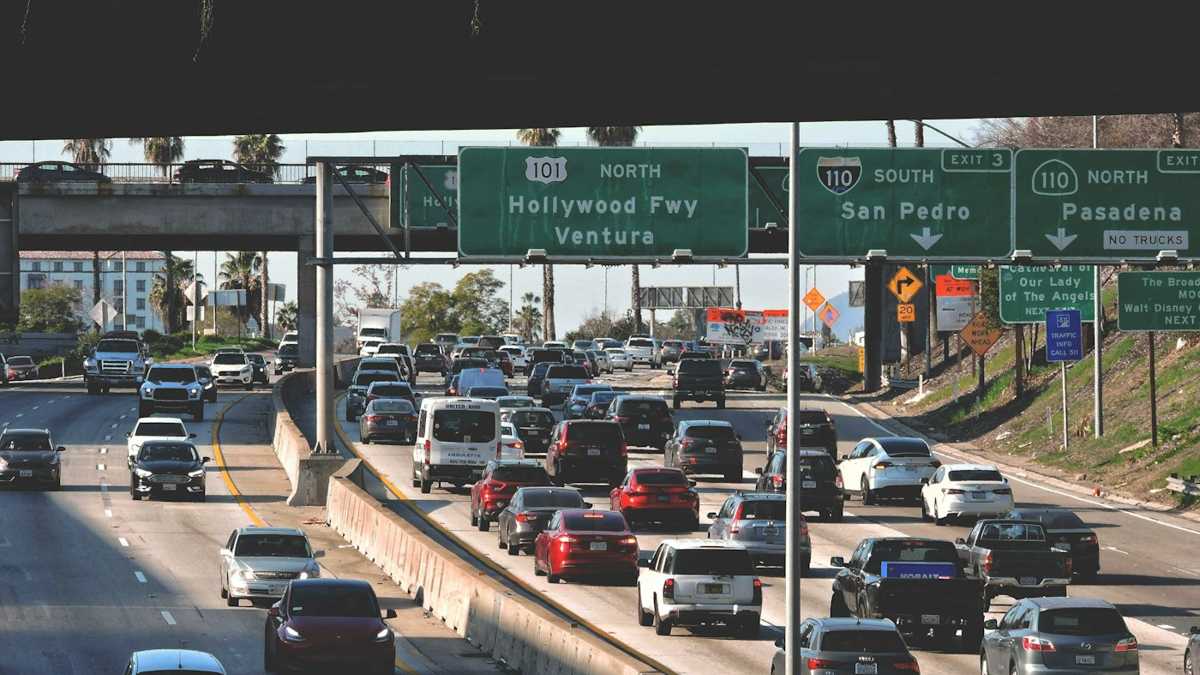
- Consider your own driving environment. A driver who spends significant time on the 405 through the Sepulveda Pass or the 101 through the Valley is exposed to more traffic, more lane changes, and more opportunities for a crash with an underinsured driver than someone who drives short local trips.
- Remember that UM/UIM protects you, your household members, and often anyone riding in your car. A single policy decision covers everyone who might ride along as a passenger, so set the number with the whole household in mind.
- Ask about UM/UIM property damage coverage separately if your state minimum property damage exposure concerns you, since it is sometimes handled as its own line.
Medical payments coverage
Medical payments coverage, often called med pay, is a separate and optional coverage that pays your own medical bills after a crash regardless of who was at fault, up to the policy limit, without needing to prove the other driver’s negligence. Med pay limits are usually modest, often a few thousand to ten thousand dollars, and it pays quickly because there is no fault dispute to resolve. It works alongside UM/UIM rather than replacing it: med pay handles the early bills while a UM/UIM or liability claim is still being evaluated.
How to read your declarations page
The declarations page, usually the first page or two of your policy documents, lists your coverage types and limits in a compact table. Look for a line labeled UM/UIM, Uninsured Motorist, or sometimes UM/UIM BI (bodily injury). The two numbers next to it, written like 30/60 or 100/300, represent the per-person and per-accident limits in thousands of dollars. A separate line for UM property damage may or may not appear depending on your carrier. Compare that UM/UIM line to your liability line just above or below it. If the UM/UIM number is lower than your liability number, or missing entirely, that is the gap this article is about.
If you cannot find the declarations page, your insurer’s website or app usually has a digital copy, and an agent can send one within minutes if you call and ask.
A composite example, policy math only
Consider a driver in Van Nuys who carries 100/300 in UM/UIM coverage and is hit by a driver who carries the state minimum, 30/60/15. The at-fault driver’s insurer pays its full per-person limit, 30,000, toward the injured driver’s claim. If the injured driver’s total claim, based on medical bills, lost income, and the value of pain and suffering, is assessed above that 30,000 figure, the UM/UIM carrier evaluates the difference. Because the UM/UIM limit is 100,000, up to an additional 70,000 may be available through that coverage, subject to the insurer’s own evaluation of the claim’s value. No dollar outcome is guaranteed here. The point of the example is the arithmetic: a 100,000 UM/UIM limit against a 30,000 liability payment leaves meaningful room, while a 30,000 UM/UIM limit against that same 30,000 payment leaves almost nothing.
This is also why a hit-and-run crash in the San Fernando Valley often turns entirely on the injured driver’s own UM coverage, since there is no at-fault insurer to pay anything at all. The UM policy is not a backup plan in that situation. It is the entire claim.
When to look at your limits again
Most people set their coverage once, when they first buy a policy or a car, and never look at it again until a renewal notice arrives or a crash happens. A few moments are worth a deliberate second look at the UM/UIM line rather than an automatic renewal.
Buying a home is one of them. A mortgage and equity are assets a serious injury claim, or a lawsuit brought against you by someone else, can put at risk, and matching your UM/UIM to a higher liability limit is a reasonable step at the same time. Adding a teen driver to the household is another, since a new driver changes both your exposure as an insured household and the value of protecting everyone who might be in the car. A new baby, a second car, or simply a policy that has not been reviewed in several years are all reasonable prompts to ask your agent for the current limit and whether it still fits.
None of this requires switching insurers or overhauling a policy. It is usually a short conversation and a modest premium change, and the alternative, discovering the gap only after a crash on the 405 or the 101, is the more expensive way to find out.
Key points
- California’s minimum liability coverage, 30/60/15, often falls short of what a real injury claim costs, and the at-fault driver is not required to carry more.
- UM/UIM coverage must be offered by your insurer, and you can only decline it in writing.
- UIM pays the gap between your limit and what the at-fault driver’s insurer already paid, rather than adding a fresh amount on top of that payment.
- A common recommendation is to match your UM/UIM limits to your liability limits, with 100/300 a frequent target for homeowners and households with dependents.
- Med pay is a separate, faster-paying coverage for your own early medical bills regardless of fault.
- Reading your declarations page takes a few minutes and can reveal a gap in coverage before you ever need to rely on it.
Frequently asked questions
Is UM/UIM coverage expensive to add or increase?
Generally not. UM/UIM tends to be one of the less expensive lines on an auto policy compared to liability or collision coverage, because most insured drivers with any coverage at least meet the state minimum. A call to your agent can get you an actual quote for raising the limit.
What if the other driver has no insurance at all?
That is exactly what UM coverage is for. If the at-fault driver carries no policy, or flees the scene and is never identified, your own UM coverage stands in for the payment that would otherwise have come from their liability insurer.
Do I need a lawyer to file a UM/UIM claim, since it is my own insurance company?
You are allowed to handle it yourself, but your own insurer’s interest in paying less is the same as any insurer’s. An attorney reviews the claim’s value the same way for a UM/UIM claim as for a claim against another driver, including medical records, wage loss, and the effect of the injury on your life.
How do I know what my current UM/UIM limits are without calling my agent?
Check your declarations page, either the physical copy or the digital version in your insurer’s app or online account. The UM/UIM line will show two numbers, per person and per accident, in the same format as your liability limits.
Reading a declarations page is a small task next to the difference it can make after a crash. If you are unsure what your policy covers, or you were hurt by a driver who had little or no insurance, our guide on the value of a car accident case and our page on what happens when the driver who hit you has no insurance go further into both sides of this question. Manoukian Law Firm’s Van Nuys page has more on how we handle cases in that part of the Valley. Call (818) 818-5031 for a free consultation. The firm helps clients in English, Spanish and Armenian. Consultations are free and there is no fee unless we win.