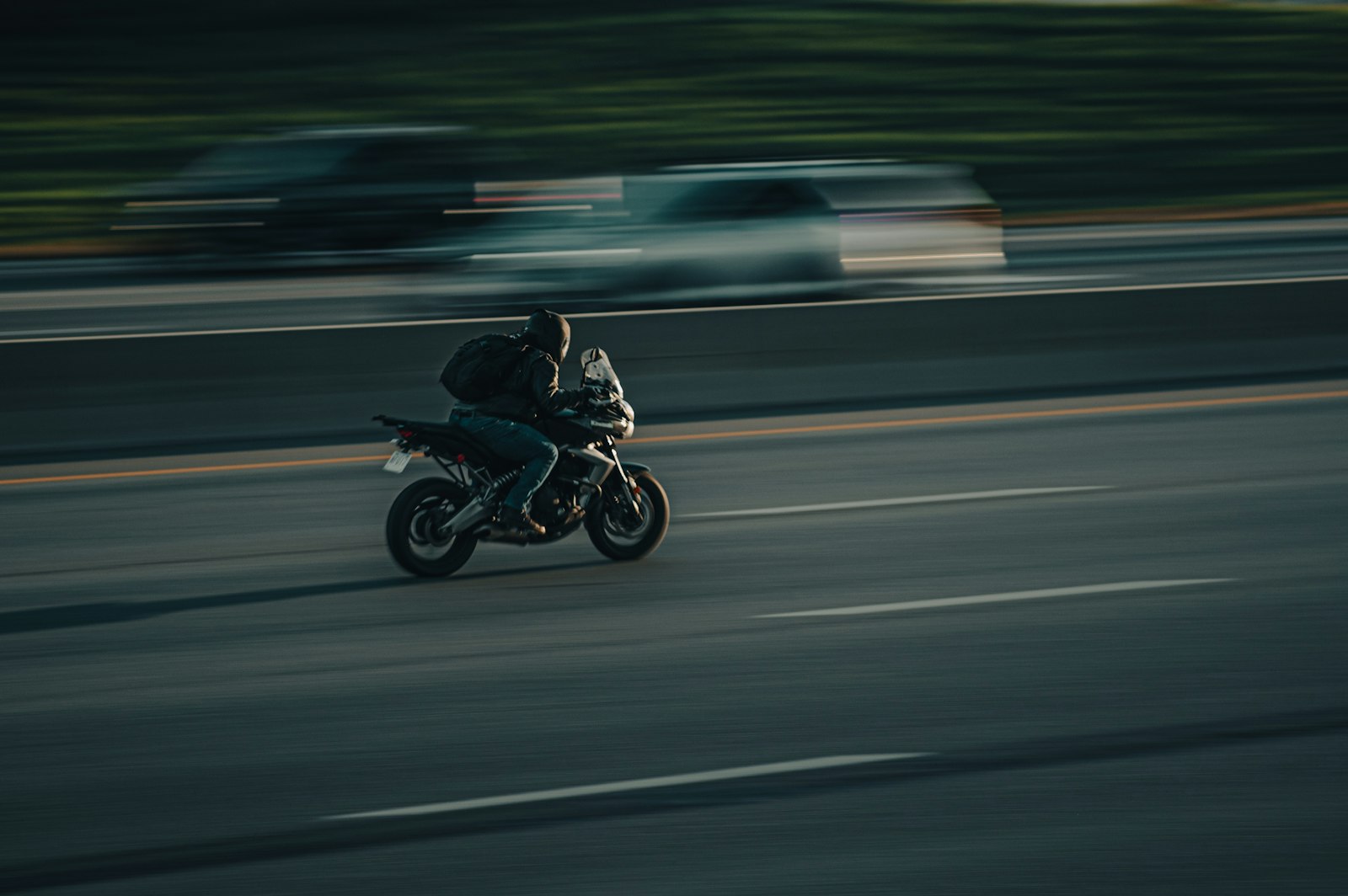
Fault in a motorcycle crash on Sierra Highway or Soledad Canyon Road comes down to the same rules that apply to any two vehicles: who had the right of way, who was speeding, who changed lanes or turned without looking. The most common motorcycle crash in the Santa Clarita Valley is a car turning left across the rider’s path, and in that collision the turning driver is usually at fault under Vehicle Code 21801. The driver’s insurer will almost always argue the rider was going too fast, was hard to see, or was lane splitting. Under California’s comparative negligence rule those arguments can reduce what you recover, but they rarely eliminate it.
The thing that decides these cases is the physical evidence from the first 48 hours, because the rider usually can’t speak for himself at the scene. The driver tells the deputy or the CHP officer “he came out of nowhere” while the rider is on the way to Henry Mayo Newhall Hospital or being flown to a trauma center. That version goes into the report. What beats it is the gouge marks on the pavement, the damage pattern on the car’s fender, the length of the skid, where the bike and the rider came to rest, and video from a gas station or a dash camera. On Sierra Highway, where speeds are high and the shoulders are wide, the scene tells a clearer story than either party can.
Who is at fault in a motorcycle accident in California?
The party whose negligence caused the crash, and fault can be split. California uses pure comparative negligence, so a rider found 30 percent at fault still recovers 70 percent of his damages. Common findings against drivers are unsafe left turns, unsafe lane changes, following too closely, and pulling out from a side street or driveway. Common arguments against riders are speed, lane position, and riding without a helmet, which affects only head injury damages.
How fault gets decided on these two roads
Sierra Highway runs long and straight from Newhall through Canyon Country and beyond, with high posted speeds and a steady run of driveways, side streets, and left turn pockets. Soledad Canyon Road is a mix: commercial driveways and signals through Canyon Country near Whites Canyon Road and Sand Canyon Road, then curves and canyon stretches to the east. The crashes follow the roads. On Sierra Highway it’s the car pulling out of a side street or turning left across the highway. On Soledad Canyon it’s the driver leaving a shopping center driveway, the lane change into a rider’s space, and the rear-end at a signal.
The left turn case is governed by Vehicle Code 21801: a driver turning left has to yield to oncoming traffic close enough to be a hazard, and has to keep yielding until the turn can be made safely. “I didn’t see the motorcycle” is an admission under that section, not a defense. A lane change into a rider is covered by the requirement that no driver move left or right until it can be done with reasonable safety and after signaling. Lane splitting has been legal in California since 2017 under Vehicle Code 21658.1, with CHP safety guidelines. A rider who was splitting lanes isn’t automatically at fault, but the speed difference between the bike and the traffic around it will be examined closely. Helmets are required for every rider in California. Not wearing one doesn’t bar the claim. It’s comparative fault for the head injuries a helmet would have prevented, and it has no bearing on a broken leg or a shattered wrist.
Who investigates depends on where you went down. Inside the Santa Clarita city limits the Santa Clarita Valley Sheriff’s Station takes the report. On the 14, the 5, the 126, and the unincorporated stretches of Sierra Highway and Soledad Canyon Road east of the city, it’s the CHP Newhall area office. Either way, the report is the officer’s opinion, written after the fact, usually without the rider’s side. It isn’t admissible at trial.
What the driver’s insurance company will argue
Speed comes first, every time. Riders are assumed to have been going fast, and the driver’s estimate (“he had to be doing 70”) gets written down as if it were a radar reading. The answer is reconstruction. Skid length, the distance the rider and bike traveled after impact, and the crush on the car’s door or fender allow an engineer to bracket the bike’s speed. Here is an example of how it plays out. A rider on Soledad Canyon Road in a 45 zone is hit by a car turning left out of a shopping center driveway. The driver tells the deputy the bike was flying. The carrier offers to split fault 50/50. The reconstruction puts the bike between 45 and 50 based on a 60-foot skid and the throw distance. The carrier’s argument collapses to a few percentage points, if that.
Visibility is next: dark clothing, no headlight modulator, the sun on Sierra Highway at 5:30 in the evening. Then lane position, lane splitting, an aftermarket exhaust, and the rider’s old tickets. Each argument has a factual answer, and comparative fault is a negotiation, not a ruling.
The quieter problem is coverage. The California minimum liability policy is $30,000 per person. A motorcycle crash with a fractured femur and surgery at a trauma center passes that number before the first follow-up visit. When the driver carries minimum limits, the claim turns to your own uninsured and underinsured motorist coverage. Check your motorcycle policy specifically. UM coverage on your car policy often does not cover you while riding a motorcycle you own that isn’t insured under that policy. If the driver is uninsured and your own bike was uninsured too, Proposition 213 generally takes away pain and suffering damages, though medical bills and lost wages remain recoverable.
What to do now
The list is short.
- Get the agency and report number, and request the report as soon as it’s released.
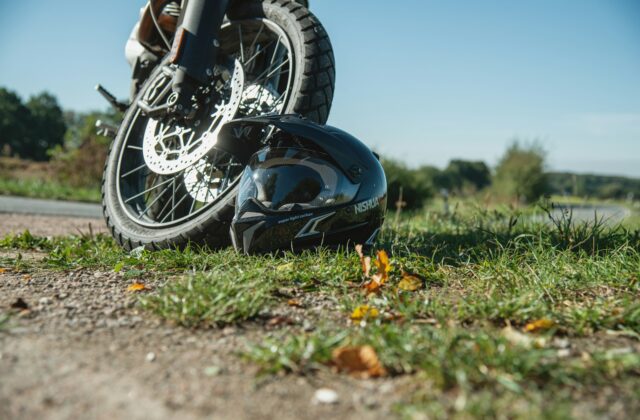
- Keep the bike, the helmet, and the gear exactly as they are. Don’t let an insurer total the bike and send it to salvage before it has been photographed and inspected.
- Have someone photograph the scene within a day or two, including skid marks, debris, gouges, and sight lines from the driver’s position.
- Ask nearby businesses whether their cameras face the road, and ask quickly, because footage is overwritten.
- Report the crash to your own insurer and ask in writing what UM and UIM limits you carry.
- Decline a recorded statement to the driver’s carrier until you’ve spoken with an attorney.
Mistakes riders make after a Santa Clarita crash
Talking about speed casually. “I was probably doing 55” on a road posted at 50 is a gift to the adjuster even if it had nothing to do with the collision. Accepting a 50/50 split because the first offer sounded reasonable. Letting the bike go to the salvage yard before anyone measured the damage. Settling the injury claim before the orthopedic surgeon says what the long-term picture looks like, when hardware removal or a second surgery is still possible. And missing the deadline. A lawsuit must be filed within two years under Code of Civil Procedure 335.1. If the crash involved a road defect, such as loose gravel left by a work crew, a missing sign, or a pothole on a canyon stretch, a claim against the City of Santa Clarita, Los Angeles County, or Caltrans is due within six months.
Questions people ask next
Does lane splitting make the crash my fault?
No. Lane splitting is legal in California. The insurer may argue some comparative fault based on the speed difference and the conditions, but a driver who changed lanes without looking is still the one who moved into occupied space.
What if I wasn’t wearing a helmet?
You can still recover. The driver’s carrier can argue comparative fault for head and facial injuries a helmet would have reduced, and it has no effect on injuries to the rest of your body.
What if the driver has no insurance or only the minimum?
Your own uninsured and underinsured motorist coverage on the motorcycle policy is the main source of recovery. If the driver was working at the time, the employer’s commercial policy may also apply.
Manoukian Law Firm handles motorcycle crash cases throughout the Santa Clarita Valley from our office in Chatsworth, about 20 minutes down the 14 and the 118, with consultations by phone, video, or at the hospital. Vaheh Manoukian handles each case personally, from preserving the bike to answering the carrier’s speed and visibility arguments. If you went down on Sierra Highway, Soledad Canyon Road, or anywhere in the valley, see our motorcycle accident lawyer page or our Santa Clarita personal injury lawyer page, or call (818) 818-5031 for a free consultation.