If the thing that hurt you belongs to the government, a city sidewalk, a county road, a Metro bus, a public school stairway, a park, you generally have six months from the date of injury to present a written claim to the right public entity, not the two years that applies to most injury cases. That rule comes from Government Code 911.2, and a claim that is not presented on time usually cannot be filed as a lawsuit at all. The six months is not a suggestion and it does not start over when you find a lawyer.
The deadline catches so many people because the government’s involvement is not always obvious. The sidewalk in front of a private house in Van Nuys is usually the city’s responsibility. The pothole on Sepulveda might belong to the City of Los Angeles, the County, or Caltrans depending on the block. The bus that rear-ended you might be LA Metro, LADOT, or a private contractor. This guide explains how the claim process works, how to figure out which entity is responsible, what a late-claim application is, and how to use the deadline tool below to see your dates.
Why government cases have a different clock
A private property owner or driver can be sued directly within two years under Code of Civil Procedure 335.1. Public entities are different. Before you can sue a city, county, school district, transit agency or the State of California for an injury, the Government Claims Act requires you to present a written claim to that entity and give it a chance to respond. The claim must be presented within six months of the date the injury occurred for claims involving personal injury or property damage.
Once the claim is presented, the entity has 45 days to act. It can accept the claim, reject it, or do nothing. If it rejects the claim in writing, you generally have six months from the date the rejection notice is mailed to file a lawsuit. If it does nothing, the claim is treated as rejected by operation of law and a longer period, generally two years from the date of injury, applies to file suit. Those follow-on deadlines are where the second set of mistakes happens: people receive a rejection letter, assume they still have the two years, and lose the case.
The claim itself is a short form, and every large entity has its own: the City of Los Angeles, the County, Caltrans, LA Metro and the Los Angeles Unified School District each use a different one. The form asks for the date, place and circumstances of the injury, a description of the damage, the names of public employees involved if known, and the amount claimed or a statement that the amount exceeds the limited civil case threshold. A claim sent to the wrong entity, or a letter that does not contain the required information, may not count.
Which entity is responsible
Figuring out who to send the claim to is the step that takes the most work, and it is the reason to start early rather than in month five.
Sidewalks
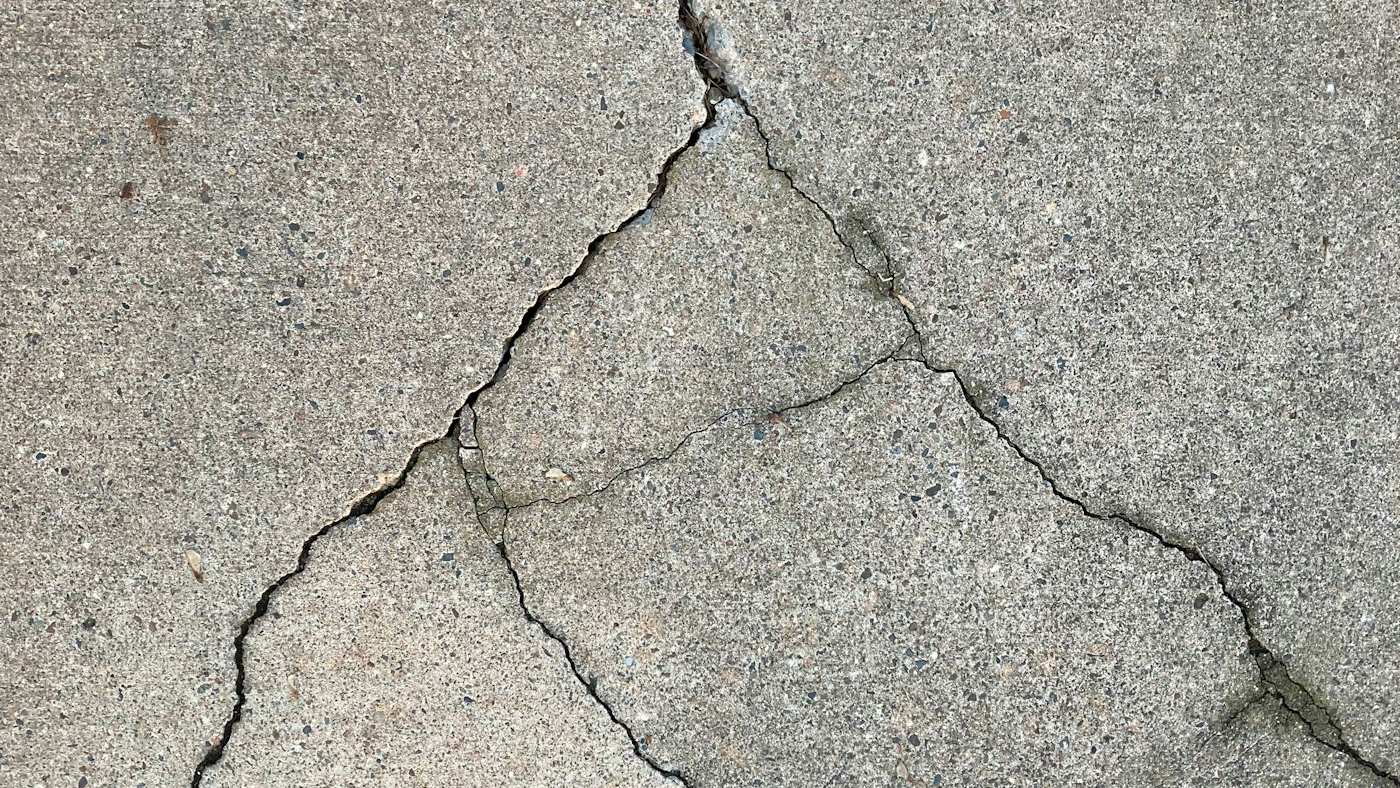
In the City of Los Angeles, sidewalks are generally the city’s responsibility, though the law allows the city to shift some of that responsibility to the adjacent property owner in certain situations. That is why a claim for a sidewalk fall is often presented to the city and, where the facts support it, to the adjacent owner as well. A sidewalk lifted by a tree in a parkway strip on a residential street in Van Nuys or Northridge is a common example. The city also keeps a record of sidewalk repair requests, and a prior complaint about the same stretch of concrete is powerful evidence of notice. Our sidewalk injury page covers how these cases are proven.
Roads and potholes
A pothole that throws a motorcyclist or causes a crash involves whichever entity maintains that stretch of road. Surface streets inside city limits are usually the city. The freeways, the 118, the 101 and the 405, and certain state highways such as parts of Topanga Canyon Boulevard, are Caltrans. Unincorporated areas are the County. The boundary lines run through the Valley in ways that are not obvious from the road, and a claim to the city about a Caltrans pothole does not preserve the claim against Caltrans.
Buses and trains
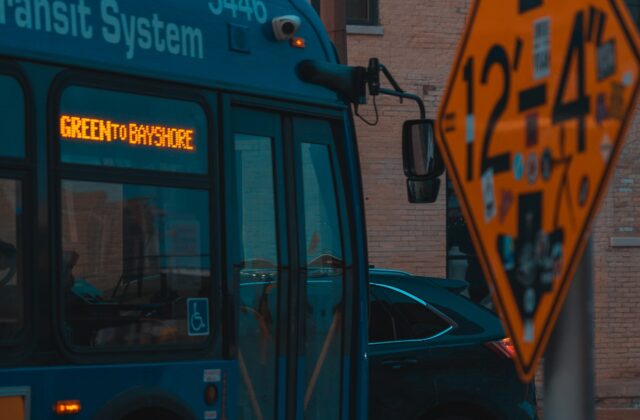
LA Metro and LADOT are government entities, so a passenger hurt when a bus brakes hard, a pedestrian struck by a bus at a Van Nuys Boulevard stop, or a driver rear-ended by a bus on Roscoe all face the six-month claim rule. Metrolink is a joint powers authority, which is also public. Our post on Metro bus and Metrolink injuries in the San Fernando Valley goes into the claim process for those agencies specifically, and our bus accident page covers bus cases more generally, including private charter and school buses that are not government entities.
Schools, parks and public buildings
A fall on a broken stair at a public school, an injury on a park playground, a trip on a courthouse step: each is a claim against the district, the city or the county that operates the property. Government-owned property cases also carry a specific set of defenses under the Government Code, including immunities for certain design decisions and a requirement that the dangerous condition be one the entity knew about or should have known about in time to fix it.
The deadline tool
Pick the type of public entity involved and enter the date you were hurt. The tool shows the six-month date for presenting a written claim and the general two-year date that would apply to a private defendant, so you can see the difference and mark the earlier one.
Government claim deadline calculator
Pick who is responsible and the date of the injury.
Gov. Code 911.2 and Code Civ. Proc. 335.1. Shorter deadlines apply in some situations; minors and some other claimants have different rules.
General information, not legal advice. Every case turns on its own facts. Call (818) 818-5031 for a free consultation.
The dates shown are general information based on the statutes described in this article, not legal advice about your case. Some situations have different rules, including claims involving minors, claims where the injury was discovered later, and claims where a rejection letter was mailed, which starts a separate clock. A lawyer should confirm every deadline against the facts.
The late-claim application
If the six months has already passed, the case is not necessarily over, but the path gets narrower. Government Code 911.4 allows a written application to the entity for leave to present a late claim, which must be filed within a reasonable time and in no event more than one year after the injury. The application has to explain why the claim was late, and the accepted reasons are limited. Mistake, inadvertence, surprise or excusable neglect can qualify, as can the claimant being a minor during the entire six-month period, or being physically or mentally incapacitated.
If the entity denies the late-claim application, a petition can be filed in superior court asking a judge for relief from the claim requirement. Judges apply the same limited grounds, and “I did not know about the six-month rule” on its own is not usually enough. An injury serious enough to keep someone in the hospital for months is a stronger basis. For a minor, Code of Civil Procedure 352 tolls the general limitations period, but the one-year outer limit on the late-claim application still needs attention. The practical point is that late is not the same as lost, and the sooner the application is filed, the better the chances.
What a government claim looks like in the Valley
The calls we get about public entity cases from Van Nuys, Panorama City and North Hills involve a predictable set of hazards: tree-lifted sidewalks along the residential streets between Sepulveda and Van Nuys Boulevard, bus stops without adequate lighting or curb access on Roscoe and Sherman Way, and potholes and uneven pavement on the older stretches of Victory Boulevard. Injured people are treated at Valley Presbyterian, Providence Holy Cross, Kaiser Woodland Hills or Northridge Hospital, and the lawsuit, when one is filed, is generally heard at the Van Nuys courthouse on Sylmar Avenue. Our Van Nuys injury page covers the local courts and agencies in more detail.
Public entity cases are also different in how they are defended. The city and county have their own attorneys, and the defenses under the Government Code are technical. A trip on a sidewalk that is lifted less than an inch may be argued to be a trivial defect, a legal defense that has ended many cases. These are not reasons to give up; they are reasons to document the hazard with photographs and measurements immediately, before the city sends a crew to grind the sidewalk down.
What to do in the first week
- Photograph the hazard from several angles, with a ruler, a coin or a shoe in the frame for scale, and note the exact address or the nearest cross streets.
- Look for evidence of how long the condition existed: weathering of the edge, prior patch attempts, paint markings from a utility survey, or a repair request logged by a neighbor.
- Get medical care the same day and tell the provider exactly where the injury happened.
- Identify the entity. Look up the address in the city’s mapping tools or ask a lawyer to do it. Do not guess.
- Present the claim on the entity’s own form, within six months, by a method that proves the date of delivery.
- Calendar the entity’s 45-day response period and the six-month lawsuit deadline that begins when a rejection is mailed.
The same six-month rule appears in our general guide to the California personal injury statute of limitations, which covers how the various deadlines fit together.
How Manoukian Law Firm handles public entity claims
The first thing we do is identify every entity that might be responsible and present a claim to each one within the six months, because presenting to the wrong one is the same as presenting to none. Then the case is investigated the way any premises or vehicle case would be: photographs, measurements, public records requests for prior complaints and repair histories, witness interviews and medical documentation. The firm handles the case from the claim form through the lawsuit if the entity rejects it. Meetings take place at our Chatsworth office, by phone or video, or in the hospital. The firm helps clients in English, Spanish and Armenian.
Key points
- A claim against a city, county, transit agency, school district or the state must be presented in writing within six months of the injury under Government Code 911.2.
- The entity has 45 days to respond; a written rejection starts a six-month deadline to file a lawsuit.
- Sidewalks, potholes, city buses, parks and public schools are the common sources of these claims, and the responsible entity is not always obvious.
- A late-claim application under Government Code 911.4 is possible for up to one year after the injury, on limited grounds.
- Public entities have technical defenses, including the trivial defect argument, so photographs with measurements taken right away matter.
- The deadline tool above shows the six-month and two-year dates for an injury date you enter, as general information only.
Frequently asked questions
Does the six-month rule apply if I was hit by a city vehicle?
Yes. A crash with a city truck, a police car, a Metro bus or any vehicle driven by a public employee on the job is a claim against the entity, and the written claim must be presented within six months. The driver’s personal auto insurance is not the primary source of recovery.
What if I am not sure whether the sidewalk belongs to the city?
Present the claim to the city anyway, and to any other entity that might be responsible, before the six months runs. Presenting a claim to an entity that turns out not to be responsible costs nothing. Missing the one that was responsible costs the case.
I sent a letter to the city describing my injury. Does that count as a claim?
It might, if the letter contains the information the Government Code requires and was delivered to the correct office, but many letters fall short. The safest approach is to use the entity’s official claim form and keep proof of delivery. If you already sent a letter, have a lawyer review it against the statute.
Can I still recover if the sidewalk was only slightly raised?
Possibly. The entity will argue the defect was trivial, and courts look at the height of the rise, lighting, whether the edge was jagged, and the surrounding conditions. A rise that would be trivial at noon may not be trivial under a broken streetlight at night. Photographs and measurements taken before repair are what the argument turns on.
If you were hurt by a sidewalk, a pothole, a city bus or any public property in Van Nuys or anywhere in California, call Manoukian Law Firm at (818) 818-5031 or reach us through our contact page before the six months runs. Consultations are free and there is no fee unless we win.