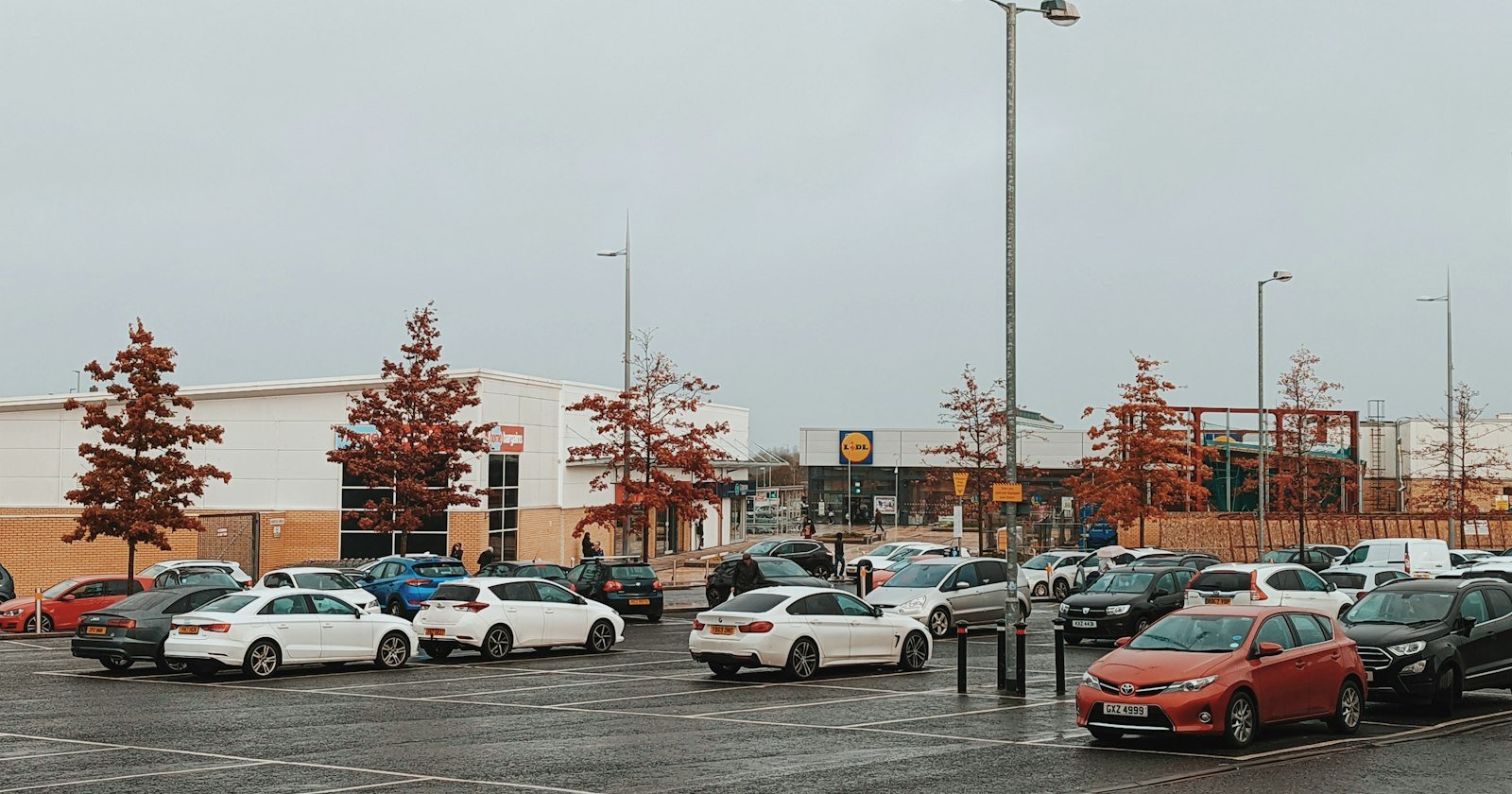
If a car hit you while you were walking through a parking lot in California, at a grocery store, a shopping center, a hospital, an apartment complex or a parking structure, you have a claim against the driver, and you may have a second claim against whoever owns and operates the lot. Parking lots are where pedestrians and vehicles share space with no sidewalks, poor sight lines, drivers backing out blind and people looking for their cars rather than for traffic. The driver who hit you is responsible for not seeing you. The property owner is responsible for a lot that was designed or maintained in a way that made the collision likely. Both have insurance, and in a serious injury the second policy often matters more. Here is how the two claims work and what to do first.
The driver
A driver in a parking lot owes the same duty of reasonable care as on a public street, and the general negligence rules apply: a driver must keep a lookout, drive at a speed safe for the conditions, and yield to pedestrians who are there to be seen. Backing collisions are the most common, and a driver backing out of a space is responsible for making sure the path is clear, including for the pedestrian who was behind the car the whole time. Vehicle Code section 22106 prohibits backing a vehicle unless it can be done with reasonable safety.
Some Vehicle Code rules apply in private lots only if the owner has posted signs under section 21107.8, which many large lots do. But the absence of a sign changes little for a pedestrian claim, because the duty of ordinary care under Civil Code section 1714 applies everywhere. The driver’s auto liability policy responds. If the driver was working, delivering, or driving a company vehicle, the employer and its commercial policy are also responsible under respondeat superior; delivery drivers and rideshare drivers in parking lots are a recurring source of these collisions, and our article on delivery van insurance explains how those policies layer.
The property owner and operator
The owner and operator of the lot owe everyone lawfully on it reasonable care in its design, maintenance and operation. That duty is the same premises liability duty that governs falls, and it extends to the risk of vehicle-pedestrian collisions when the lot’s condition makes them foreseeable. Conditions that recur in these cases:
No marked pedestrian paths from the parking area to the entrance, so that people walk down the drive aisles. Blind corners created by landscaping, dumpster enclosures, signage or structural columns. Inadequate lighting at night, which is also the most common finding in parking structure cases. Speed bumps missing or placed where they do not slow traffic near the entrance. Two-way drive aisles that are too narrow, or angled parking that forces drivers to back out blind into a pedestrian path. Cart corrals and displays placed where they block sight lines. A drop-off zone that mixes pedestrians with through traffic. In a parking structure, ramps and turns with no mirrors, no pedestrian walkway and no lighting.
Design standards for these features exist, from the Institute of Transportation Engineers and from the City’s own parking design requirements, and a traffic engineer applies them. The property owner’s own records show prior incidents, complaints, and whether a safety assessment was ever done. A lot where pedestrians have been struck before and nothing was changed is a lot the owner knew was dangerous.
As in any shopping center case, the lot is usually controlled by the property owner and its management company rather than the individual store, and the lease decides it. Both are put on notice.
Why the second claim matters
Drivers carry small policies. A pedestrian struck by a car, even at parking lot speed, commonly suffers a fractured leg, hip or pelvis, a knee injury, or a head injury from the fall. Surgery and months of recovery exceed a minimum policy quickly. The property owner carries a commercial general liability policy, often with an umbrella above it, sized for serious injuries. Your own uninsured and underinsured motorist coverage is the other layer, and it applies to you as a pedestrian.
The evidence
Video. Parking lots are among the most heavily recorded places in the city: the store’s exterior cameras, the lot operator’s cameras, license plate readers at the entrance, and the cameras on nearby buildings. In a structure, every level and ramp is usually covered. Footage is overwritten within days to weeks, and a preservation letter to the store, the property owner and the lot operator goes out immediately.
The lot itself. Photographs of the location from the driver’s and your perspective, the sight lines, the lighting at the same time of day, the markings or their absence, the speed bumps, the landscaping. Measurements of the aisle width and the parking angle. A traffic engineer’s site visit in a serious case.
The incident report, if the store or lot operator wrote one, and the police report if the police responded. LAPD responds to parking lot collisions with injuries, and the report records the driver’s account and insurance.
Witnesses: other shoppers, employees collecting carts, the valet.
The driver’s phone records and the vehicle’s event data recorder, in litigation.
What to do
Call the police and make sure a report is taken; private property collisions are often not reported, and the report is what establishes the driver’s identity and insurance. Photograph the car, its plate, the driver’s license and insurance card. Photograph the scene before anything moves. Report the collision to the store and the property manager. Get witness names. Go to the emergency room or urgent care the same day. Do not give a recorded statement to the driver’s insurer or the property owner’s.
Key points
The driver who hit you is responsible for keeping a lookout and backing safely. Vehicle Code rules apply in posted lots; ordinary care applies in every lot.
The property owner and operator are responsible for a lot whose design, lighting, sight lines or maintenance made the collision foreseeable. That is a separate premises liability claim with a separate, larger policy.
Parking lots are heavily recorded. Video disappears in days; preserve it in writing.
Insist on a police report. Your own uninsured and underinsured motorist coverage applies to you as a pedestrian.
Two years to file against private parties; six months for a government claim if the lot is publicly owned.
Frequently asked questions
The driver’s insurer says pedestrians in parking lots are supposed to watch for cars. Is that the law? Pedestrians owe reasonable care for their own safety, and comparative fault can apply. But a driver backing out without looking, or driving a drive aisle at street speed, is not excused by a pedestrian’s presence. The percentages are decided on the evidence.
It was a hospital or a college parking lot. Who owns it? Possibly a public entity, which means a government claim within six months. Public hospitals, public universities and city-owned structures all require it. Confirm ownership immediately.
The store says it has no video of the lot. Is that true? Sometimes. But exterior cameras are standard at every large retailer, and license plate readers and neighboring businesses often cover what the store’s cameras do not. The preservation letter goes to every possible source, and the store’s claim that it has nothing is tested in discovery.
I was hit in a valet or drop-off area. Is the valet company responsible? If a valet driver hit you, the valet company and its policy are responsible. If the design of the drop-off area put you in the path of traffic, the property owner is too.
Manoukian Law Firm, P.C., Chatsworth, California. Free consultation. No fee unless we win. Past results do not guarantee a similar outcome.