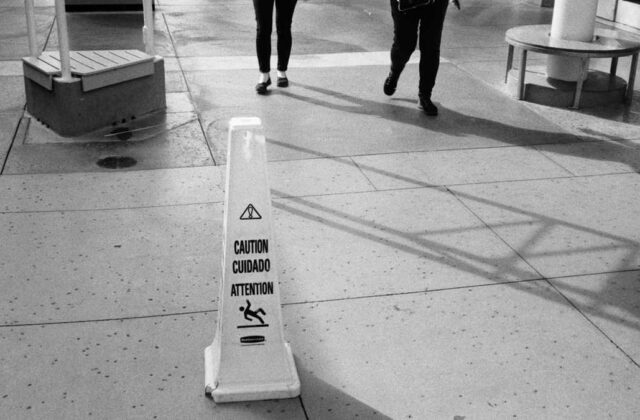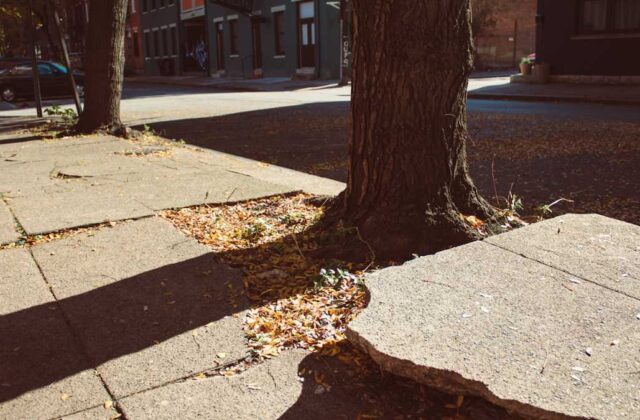
If you fell in a Canoga Park store, parking lot or apartment building, the person responsible is whoever controlled the property and knew, or should have known, about the hazard without fixing it or warning you. That is the rule from Rowland v. Christian, and it applies to the grocery aisle on Sherman Way, the garage at Westfield Topanga, the stairwell in a Vanowen apartment complex and the lifted sidewalk slab on a side street off Sherman Way. The property owner’s insurance company will argue that nobody knew about the spill, the loose handrail or the broken light. Your job in the first day is to make sure the evidence that answers that argument still exists.
The same day, report the fall to the store manager or the building’s management and ask for a copy of the incident report, photograph the hazard and the area around it before it is cleaned or repaired, get names and phone numbers from anyone who saw it, and get examined at an emergency room or urgent care. Then send a written request that the video be preserved. Camera systems in stores and apartment buildings record over themselves within days, and once the footage is gone, the case becomes your word against the owner’s. This guide walks through where Canoga Park falls happen, who is responsible in each setting, and what the claim looks like from there.
Where Canoga Park falls happen
Canoga Park runs from Nordhoff Street south to Vanowen Street, between Shoup and De Soto, with Topanga Canyon Boulevard, Sherman Way, Roscoe Boulevard and Canoga Avenue carrying most of the traffic. The retail centers along Sherman Way and Roscoe, the markets and restaurants on Topanga Canyon, and Westfield Topanga, which carries a Canoga Park address at 6600 Topanga Canyon Boulevard, draw people on foot all day. The dense apartment blocks off Vanowen and Sherman Way add stairwells, walkways, pool decks and parking garages.
The falls we see follow that map: a wet entry mat in a market during the first rain of the season, a produce spill nobody logged, a parking lot with a pothole between the striped spaces, a garage ramp with a lip nobody painted, an apartment stairway with a loose tread that tenants complained about for months, and a sidewalk slab lifted by a tree root.
The rule that decides these cases
California does not make a property owner responsible for every fall. Under Rowland v. Christian, an owner or occupier owes a duty of reasonable care to people on the property, and a premises case turns on two questions: did the owner have notice of the hazard, and was it reasonably fixed or warned about.
Notice can be actual or constructive. Actual notice means an employee saw the spill or a tenant reported the broken step. Constructive notice means the hazard existed long enough that a reasonable inspection would have found it. A spill that happened thirty seconds before you walked through is a hard case. A spill that sat for forty minutes while the aisle went uninspected is a different one, and the store’s own sweep logs and inspection schedules are how that gets proven.
California also applies pure comparative negligence under Li v. Yellow Cab. If the owner’s insurance company argues that you were looking at your phone or wearing the wrong shoes, a share of fault reduces the recovery rather than ending it.
Stores and shopping centers
In a market or a big-box store, responsibility usually sits with the business that operates the space, and sometimes with the landlord or the cleaning contractor as well. The evidence that matters is the incident report, the surveillance video, the sweep sheet or inspection log for that aisle, prior complaints about the same spot, and the employee schedule for the hour of the fall. None of it is volunteered. It is obtained through a preservation letter and, if the case is filed, through discovery. Our slip and fall page covers how those cases are built.
Parking lots and garages
Lot and garage falls are treated as trivial by insurers and are often anything but. A pothole, an unpainted wheel stop, a drain grate set below grade, a ramp with no handrail or a dark stairwell to the upper level is a maintenance question, and the owner or the property management company usually has a maintenance history for it. Photograph the hazard with something for scale, the lighting, the nearest camera pole and the nearest store entrance.
Apartment complexes
A landlord’s duty covers the common areas: stairs, walkways, railings, lighting, pool decks and garages. In the apartment blocks off Vanowen and Sherman Way, the hazard usually has a paper trail. Tenants sent texts to the manager, work orders were opened and closed, and a prior tenant fell on the same step. Those records establish notice. Our apartment injury page explains what to gather from your own phone and what has to come from the landlord.
The same-day steps
- Report it before you leave. Tell the manager, the security desk or the building office, and ask for a copy of the incident report or at least the report number and the name of the person who took it.
- Photograph the hazard, the surrounding area, the lighting, any warning signs or the absence of them, and the shoes you were wearing.
- Look up for cameras and photograph where they are pointed.
- Get names and phone numbers from witnesses, including the employee who came to help.
- Get examined the same day. A fall onto concrete produces wrist, hip, knee and head injuries that hurt more the next morning, and the date of the first medical visit anchors the claim.
- Send a written preservation request for the video within the week. A lawyer can do this the same day you call.
- Do not give a recorded statement to the property owner’s insurance company, and do not sign anything they send.
Getting medical care in Canoga Park
The nearest emergency room is UCLA West Valley Medical Center, formerly West Hills Hospital and Medical Center, at 7300 Medical Center Drive in West Hills. Kaiser Permanente Woodland Hills Medical Center at 5601 De Soto Avenue has an emergency department for Kaiser members and anyone with an emergency. For a sprain, a cut or a sore hip you want checked, an urgent care creates the same-day record you need. Go to the emergency room for a blow to the head, a possible fracture, or numbness.
Tell the doctor exactly how you fell and what hurts, including the parts that seem minor. Under Howell v. Hamilton Meats, the medical damages you can recover are the amounts actually paid or owed for treatment, so keep every bill, explanation of benefits and receipt.
When the police are involved
Most falls on private property never produce a police report, and that is normal. The LAPD’s Topanga Community Police Station at 21501 Schoenborn Street, Canoga Park, CA 91304, phone (818) 756-4800, covers Canoga Park along with West Hills, Winnetka and Woodland Hills. Officers come when there is a crime, a serious injury or a dispute at the scene. If they do come, ask for the report number. Otherwise your own documentation and the business’s incident report are the record.
Sidewalks and public property: the six-month rule
A fall on a public sidewalk, in a city park or at a Metro G Line station is a claim against a government entity, and the calendar is different. Under Government Code 911.2, a written claim must be presented to the public entity within six months of the injury, on its own form, before any lawsuit can be filed. Miss it and the case is generally over. The City of Los Angeles is responsible for most Canoga Park sidewalks, and a lifted slab on a residential street off Sherman Way is a city claim.
Six months passes while people are still in physical therapy, and the slab is often ground down or replaced before then, so photographs with something for scale, taken the day of the fall, are the core of the case. Our sidewalk injury page explains how those claims are prepared. Where a minor is injured, Code of Civil Procedure 352 tolls the general limitations period, but tolling does not extend the six-month claim rule.
Deadlines and where the case is filed
For a fall on private property, the deadline to file a lawsuit in California is generally two years from the date of injury under Code of Civil Procedure 335.1. Once a claim is properly submitted to the owner’s insurance company, the Fair Claims Settlement Practices Regulations require it to accept or deny the claim within 40 days of receiving proof of claim (10 CCR 2695.7), or explain in writing why it needs more time.
Civil cases from Canoga Park are filed in the Los Angeles Superior Court. Under the court’s Local Rule 2.3, an unlimited civil personal injury case (one seeking more than $35,000) is filed in the Central District at the Stanley Mosk Courthouse, 111 North Hill Street, downtown. The court may later transfer it to a district courthouse such as the Van Nuys Courthouse East at 6230 Sylmar Avenue or the Chatsworth Courthouse at 9425 Penfield Avenue. Most premises cases settle, but a filed case usually runs 12 to 24 months and includes a deposition and often a site inspection.
How we handle Canoga Park premises cases
Manoukian Law Firm’s office is at 9520 Topanga Canyon Boulevard, Suite 102, in Chatsworth, about ten minutes north of Canoga Park on Topanga Canyon. Premises cases are won or lost in the first two weeks, on the preservation letter and on getting to the property before anything changes, and ten minutes away means that happens quickly. Every file is handled by the attorney you hire, from the first call to the end.
The early work is the same in every setting: the incident report, the video, the maintenance and inspection records, the prior complaints, the medical records and photographs of the hazard before it is repaired. Meetings happen at the Chatsworth office or by phone or video, and the firm helps clients in English, Spanish and Armenian. See the Canoga Park page for the neighborhood and the practice areas page for the other kinds of cases we handle.
Key points
- A Canoga Park premises case turns on notice under Rowland v. Christian: whether the owner knew or should have known about the hazard and whether it was fixed or warned about.
- Report the fall before leaving, photograph the hazard and the cameras, get witness names, and be examined the same day at UCLA West Valley Medical Center, Kaiser Woodland Hills or an urgent care.
- Store video, sweep logs, work orders and prior complaints are the evidence, and they must be requested in writing within days.
- Falls on private property carry a two-year deadline under Code of Civil Procedure 335.1; a share of fault reduces the recovery rather than ending it.
- Sidewalk, park and transit station falls are government claims with a six-month deadline under Government Code 911.2.
- Canoga Park injury lawsuits are filed in the Los Angeles Superior Court downtown and may later move to the Van Nuys or Chatsworth courthouse.
Frequently asked questions
The store says the floor was dry when they checked. Does that end the claim?
No. That is a notice argument, and it is answered with records. Sweep logs, inspection schedules, prior complaints, maintenance tickets and the video itself speak to whether the hazard existed long enough for the owner to know about it. The store’s word about its own inspection is a starting point for questions, not the end of the case.
Nobody wrote an incident report. Can a claim still be made?
Yes. Many businesses never fill one out, and some managers refuse to. Your photographs, your same-day medical visit, the names of witnesses and a prompt written notice to the property owner replace it. Report the fall in writing as soon as possible if it was not reported at the scene.
The apartment manager knew about the broken step for months. Does that matter?
It is the center of the case. Texts, emails, work orders and earlier complaints from other tenants establish actual notice, which is the strongest form. Keep every message you sent to the manager and ask neighbors whether they reported the same problem.
The fall was on a city sidewalk. How fast do we have to move?
Quickly. A written claim to the City of Los Angeles is generally due within six months of the fall under Government Code 911.2, and the sidewalk is often repaired before then. Photograph the slab with a ruler or a shoe for scale the same day, and call a lawyer that week.
If you fell in Canoga Park or anywhere in the west Valley, we are glad to talk it through, whether or not you hire anyone. Call Manoukian Law Firm at (818) 818-5031 or reach us through the contact page. Consultations are free and there is no fee unless we recover for you.