If you were in a car accident in Santa Clarita, the first month decides most of what happens after it. Two letters need to go out in the first days. The first is a letter of representation, which tells each insurance company involved that you are represented and that every call and request must go through your lawyer’s office. Once it arrives, the adjuster stops calling you, and nothing you said on the phone while you were still in pain can be used against you. The second is a preservation letter, which goes to the other driver, to the insurance company holding the vehicles, and to any business with a camera facing the road where it happened. It requires that the cars, the footage and the records be kept exactly as they are until they have been examined. Evidence disappears quickly after a collision. Damaged cars are sold for salvage within days and most cameras record over themselves within a week, so these letters cannot wait.
The police report
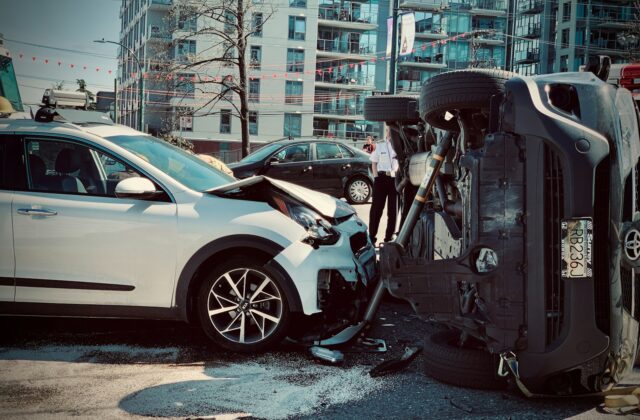
The police report comes next. A crash on the 5, the 14 or the 126 is reported by the CHP office in Newhall, and a crash on a city street such as Soledad Canyon Road is reported by the Santa Clarita Valley Sheriff’s Station. The report takes a week or two and should be read the way an adjuster will read it, because the narrative and the diagram shape every conversation about fault that follows.
A CHP report is requested with form CHP 190 once it has been approved, and a Sheriff’s report is requested from the station on Golden Valley Road. If the report puts the fault on you and you disagree, the officer’s opinion is not the last word. It can be answered with the footage, the photographs and the witness statements the preservation letters were sent to keep, which is one more reason those letters go out before anything else.
Property damage: repair, rental, loss of use and diminished value
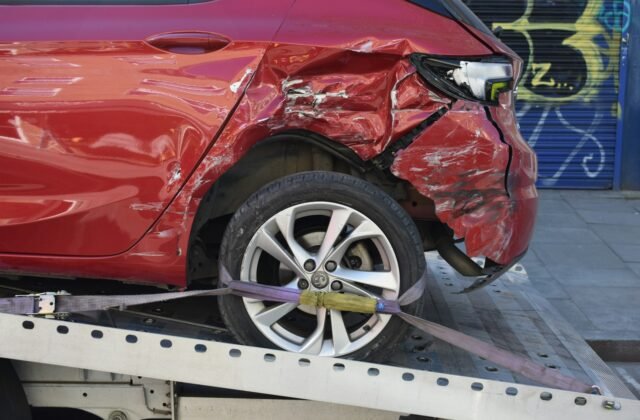
Property damage runs on its own track and has more steps than most people expect. The car has to be inspected and either repaired or paid out as a total loss. A rental has to be arranged and the days without a car counted, because that time, called loss of use, is a loss the insurance company owes you. If the car is repaired, it is now worth less than an identical car with no crash on its history, and that difference, called diminished value, is a separate claim that most people never make. Every estimate, invoice and rental receipt should be kept.
The other driver’s insurance company pays these costs only after it accepts that its driver was at fault, and that decision can take weeks. If you carry collision coverage, your own insurance company can repair the car now and collect from the other side later, and your deductible is usually returned to you when it does. Every California driver is required by Vehicle Code section 16056 to carry at least $30,000 per person and $60,000 per accident for injuries and $15,000 for property damage. A driver carrying only the minimum may not have enough to cover a totaled car, and knowing that early changes how the rest of the claim is handled.
Medical treatment in the first month
The most important part of the first month is medical treatment, and the rules are simple to state and easy to break. Do not wait for your next scheduled appointment if you are in pain now; go to the emergency room at Henry Mayo or to an urgent care today, because the record of that visit ties the injury to the crash by date. See your primary care doctor, but understand that a primary care visit is not enough on its own. If your neck or back hurts, if you have numbness or tingling, or if a headache will not go away, ask for a referral to an orthopedist, a neurologist or physical therapy at that first visit rather than waiting to see whether it improves. Specialists should be involved early, because an insurance company reads a delay as proof that the injury was minor. Above all, avoid a gap in treatment. A few weeks between visits is the single argument adjusters use most, and it works.
Use your health insurance for the treatment and keep a short record of each visit, the name of the provider and what you were told. Your health plan may later ask to be repaid out of the settlement, and that repayment is something a lawyer negotiates down at the end of the case. If your own auto policy includes medical payments coverage, it pays your treatment bills up to its limit no matter who was at fault, and using it does not reduce the claim against the other driver.
Your own insurance company and the DMV
Two things in the first month involve your own paperwork rather than the other driver’s. The first is a report to the DMV. Vehicle Code section 16000 requires a report on form SR-1 within ten days of any crash that caused an injury, a death or more than $1,000 in property damage. It is separate from the police report, and it is your responsibility, not the insurance company’s. The second is notice to your own insurance company. Your policy requires you to report the crash promptly even when the other driver was at fault, and that notice matters more than it seems. If the other driver had no insurance, or had only the minimum, your uninsured and underinsured motorist coverage under Insurance Code section 11580.2 is what pays for your injuries, and it is there only if you did not sign it away when you bought the policy.
You are not required to give a recorded statement to the other driver’s insurance company, and you should not. Once the letter of representation has arrived, the question does not come up again.
Deadlines that start on the day of the crash
A lawsuit for an injury must be filed within two years under Code of Civil Procedure section 335.1, which sounds like a long time until the treatment, the records and the negotiation have each taken their share of it. If the other vehicle belonged to the city, the county, the state or a transit agency, the deadline is much shorter. Government Code section 911.2 requires a claim to be presented to that agency within six months before any lawsuit can be filed. In Santa Clarita that covers a city vehicle, a Sheriff’s car, a Caltrans truck and a Santa Clarita Transit bus.
Questions people ask next
I felt fine the day of the crash. Should I still see a doctor?
Yes. Neck and back injuries often appear a day or two after a crash, once the adrenaline is gone and the muscles have tightened. A visit to urgent care creates a record dated close to the collision, and if the visit finds nothing, it has cost you an afternoon and nothing else. If it finds something, the date on that record is the difference between an injury that is tied to the crash and one the insurance company argues came from somewhere else.
The other driver’s insurance company already offered me money. Should I take it?
An offer in the first weeks arrives before anyone, including you, knows how badly you were hurt. Accepting it means signing a release, and a release signed in the second week cannot be reopened in the fourth month when an MRI shows a herniated disc. The offer is made early for exactly that reason. Wait until the treatment has run its course and the full picture of the injury is known.
Do I need a lawyer if the crash was minor?
Not always. If no one was hurt and the only question is the repair, the property damage claim can be handled on your own with the steps above. Once there is an injury, the first month is where the case is built or lost, and the work described here is what a car accident lawyer does for you while you concentrate on getting better.
All of this is happening in the same thirty days, and each piece has a way to go wrong. A lawyer who handles car accident cases does this work every week, which is the reason to have one from the first week rather than the last. Our office handles car accident cases throughout Santa Clarita, including Valencia, Canyon Country, Newhall, Saugus and Stevenson Ranch, from Chatsworth, a short drive down the 5 and the 14. Call (818) 818-5031, Monday through Friday, 9 to 5, to talk through what has happened so far.