If you were hurt as a passenger, the insurance of whichever driver caused the crash pays, and a passenger is almost never one of the drivers. That is true whether you were in the back of an Uber, riding with a coworker, or in a friend’s car on the way home from a concert in North Hollywood. Your claim is against the at-fault driver’s liability coverage. If your own driver caused the crash, the claim is against that driver’s policy, and if a rideshare driver was carrying you, the claim is against a commercial policy that is far larger than a personal one.
Where it gets complicated is when the at-fault driver has no insurance or too little, when the crash was partly the fault of two drivers, or when one of the drivers is a friend you do not want to sue. This guide explains each situation as it stands in 2026, including the three rideshare insurance periods and the new uninsured motorist figures that apply during a trip, and how a claim against a friend’s policy works without the friend paying a dollar of their own money.
Start with the basic rule: fault decides the policy
California is a fault state. The driver who caused the crash, or that driver’s insurer, is responsible for the injuries it caused. Every driver is required to carry at least $30,000 per person and $60,000 per accident in bodily injury liability coverage, plus $15,000 in property damage, under Vehicle Code 16056. Those figures went up on January 1, 2025, and many people carry exactly that minimum.
As a passenger, you have a claim against whichever driver was at fault. If the other car ran a red light on Lankershim Boulevard and hit the car you were riding in, your claim is against that driver’s policy. If your own driver rear-ended someone on the 101 near Vineland, your claim is against your own driver’s policy. If both drivers share fault, you have a claim against both, and under California’s pure comparative negligence rule from Li v. Yellow Cab each pays in proportion to their share. A passenger is rarely assigned any fault at all.
Passenger in an Uber or Lyft: the three periods
Rideshare companies in California are regulated by the Public Utilities Commission, and Public Utilities Code 5433 sets the insurance a transportation network company must maintain. The amount of coverage depends on what the driver’s app was doing at the moment of the crash, which is why the first question in every rideshare case is which period applied.
Period 1: app on, no ride accepted
The driver is logged in and waiting for a request. Required coverage is $50,000 per person and $100,000 per accident for bodily injury, plus $30,000 for property damage. There is no passenger yet, but this period matters to anyone hit by a driver who was waiting for a ping.
Period 2: ride accepted, driver en route
The driver has accepted a request and is on the way to the pickup. Coverage rises to $1,000,000 in liability. A pedestrian or another driver hit during this window has a claim against that policy.
Period 3: passenger on board
From the moment you get in until the moment you get out, the company must maintain $1,000,000 in liability coverage. If the rideshare driver caused the crash, that policy responds to your claim. If another driver caused the crash, your primary claim is against that driver, and the rideshare policy’s uninsured and underinsured motorist coverage stands behind it.
The 2026 change to UM/UIM during a trip
Under SB 371, effective January 1, 2026, the uninsured and underinsured motorist coverage a rideshare company must carry during a trip is $60,000 per person and $300,000 per incident. This is the coverage that matters when the driver who hit your Uber has a minimum policy, or none. These figures are the statutory minimum, and a company may carry more than the minimum. Ask for the policy rather than assuming.
What this means in practice: if a driver with a $30,000 policy hits your Lyft on the 170 and your injuries are worth more than that, the rideshare UM/UIM coverage of $60,000 per person is the next layer, and your own auto policy’s UM/UIM coverage, if you have one, may be a layer after that. Stacking those layers correctly is most of the work in a rideshare passenger case, and it is covered in more depth on our Uber and Lyft accident page.
The screenshot to take
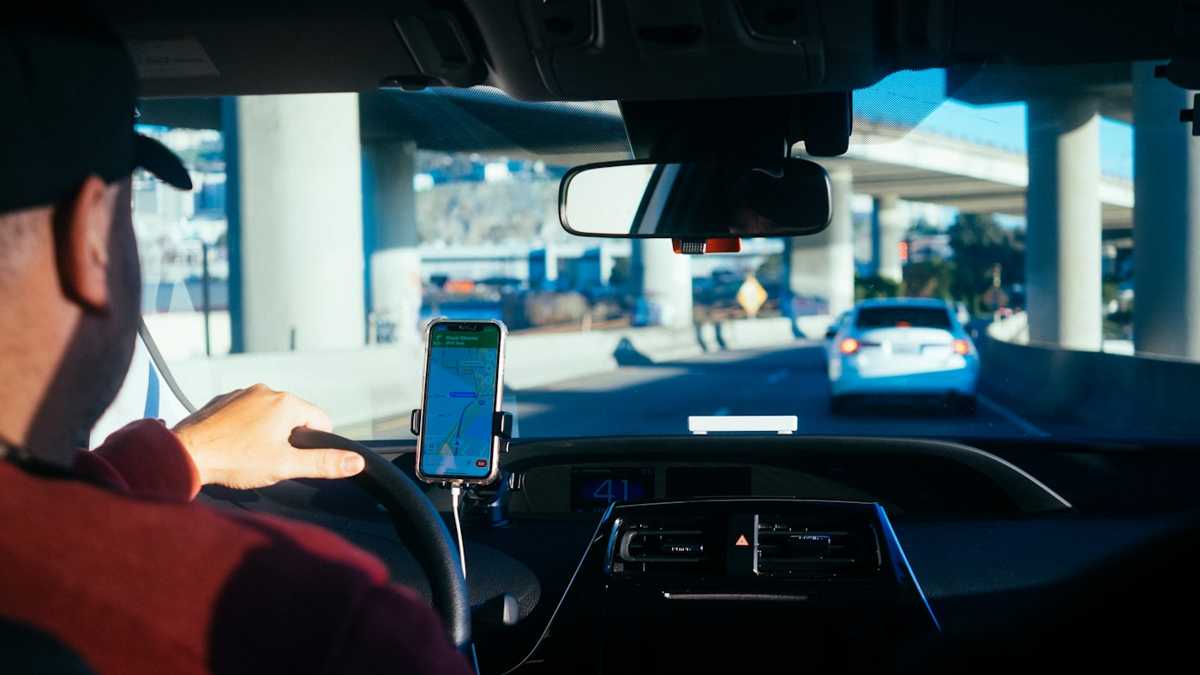
Before you leave the scene, screenshot the ride in the app: the driver’s name, the vehicle, the pickup and destination, and the time. A screenshot taken at the scene settles the period question immediately and avoids a month of correspondence.
Passenger in a friend’s car: claiming without suing your friend
This is the situation people find hardest, and the one where the most claims get abandoned. Your friend was driving, made a mistake, and you were hurt. You do not want to sue your friend.
Here is how it actually works. Your friend bought liability insurance for exactly this situation. The claim is submitted to your friend’s insurance company, which evaluates it and pays it from the policy. Your friend’s involvement is limited to reporting the crash and giving a statement. The friend does not pay the settlement and does not pay a deductible on a bodily injury claim.
If the insurance company refuses to pay a fair amount and a lawsuit becomes necessary, the lawsuit is technically filed against the driver, because that is how the law is structured. Even then, the insurance company hires and pays the defense lawyer, controls the defense and pays any settlement or judgment up to the policy limits. In the ordinary case the friend’s personal assets are never at risk. The only situation in which a friend could be personally exposed is a judgment above the policy limits, which is uncommon and can usually be avoided by settling within the limits.
Two more things to know. First, if your friend has medical payments coverage, which is optional in California, it pays passengers’ medical bills up to its limit regardless of fault. Ask whether it exists. Second, if the other driver caused the crash, the claim is against the other driver and your friend is simply a witness.
When the at-fault driver has no insurance or too little
A meaningful share of drivers on California roads carry no insurance, and many more carry only the minimum. When a passenger is hurt by one of those drivers, the search for coverage moves through several layers.
The first layer is any uninsured or underinsured motorist coverage on the car you were riding in. UM/UIM coverage generally extends to passengers, not just the named driver, and every California auto insurer must offer it under Insurance Code 11580.2. If your friend or your rideshare driver carried it, you can claim under it.
The second layer is your own auto policy, if you have one. Your UM/UIM coverage follows you as a person and applies when you are a passenger in someone else’s car. People often do not realize this and never file the claim.
The third layer is the UM/UIM coverage of a relative you live with, since many policies cover resident family members. Our guide on what to do when the driver who hit you has no insurance walks through all of these layers in order.
Several passengers, one policy
A crash with three or four passengers raises a problem that a single-passenger crash does not. The at-fault driver’s per-accident limit is shared by everyone hurt. A minimum policy of $30,000 per person and $60,000 per accident with three seriously injured passengers cannot pay each of them $30,000; the $60,000 is divided. In that situation the documentation each passenger has and the availability of UM/UIM coverage above the at-fault policy matter a great deal, which is one of the clearest reasons for a passenger to get advice early.
What to do in the first days
Get medical care the same day, even for stiffness you expect to fade. In the east Valley that may mean Providence Saint Joseph in Burbank or an urgent care along Magnolia Boulevard; in the west Valley, Kaiser Woodland Hills or West Hills Hospital. Tell the provider you were a passenger. Get the police report number, or if no officer responded, photograph every license plate, insurance card and driver’s license. The DMV SR-1 is required of drivers within ten days when there is injury; confirm your driver filed it, because it creates a record.
Expect calls from more than one insurance company, and possibly from the rideshare company’s claims team. Each will want a recorded statement. Nothing requires you to give one, and a recording taken in the first week routinely understates injuries that have not fully appeared. Our post on recorded statements explains how to decline without damaging the claim.
Deadlines
The general deadline to file a lawsuit is two years from the crash under Code of Civil Procedure 335.1. If a public entity was involved, for example a city bus that hit the car you were in, a written claim must be presented within six months under Government Code 911.2. Rideshare claims have no shorter statutory deadline, but trip data and dashcam footage are much easier to obtain in the first weeks, so waiting has a cost even when the clock is long.
How Manoukian Law Firm handles passenger cases
We begin by identifying every policy that might respond: the at-fault driver’s liability coverage, the rideshare policy and its period, your driver’s UM/UIM and medical payments coverage, your own policy and any resident relative’s policy. Then we gather the trip data or police report, the medical records and the billing, and present the claim to each insurer in the right order. If a fair resolution is not offered, the case is filed in Los Angeles Superior Court, generally at the Van Nuys courthouse for crashes in the east Valley, and prepared as if it will be tried. Our car accident page describes the process from the first call.
Every case is prepared as if it will be tried. Meetings take place at our Chatsworth office, by phone or video, or in the hospital when travel is hard. The firm helps clients in English, Spanish and Armenian, and our North Hollywood page covers the local courts, hospitals and roads in more detail.
Key points
- A passenger’s claim is against whichever driver caused the crash, and a passenger is almost never assigned fault.
- Rideshare coverage depends on the period: 50/100/30 with the app on and waiting, and $1,000,000 in liability once a ride is accepted or a passenger is on board.
- Since January 1, 2026, rideshare UM/UIM coverage during a trip is $60,000 per person and $300,000 per incident.
- A claim against a friend’s policy is paid by the friend’s insurer; the friend does not pay personally in the ordinary case.
- Your own UM/UIM coverage, and a resident relative’s, can apply when you are hurt as a passenger in someone else’s car.
- The lawsuit deadline is generally two years, and six months for a written claim against a public entity.
Frequently asked questions
I was in an Uber and another driver hit us. Who do I claim against?
Your primary claim is against the other driver’s liability insurance. If that driver is uninsured or carries too little, the rideshare company’s UM/UIM coverage of $60,000 per person applies during a trip, and your own auto policy’s UM/UIM coverage may apply after that. Take a screenshot of the trip so the period is never in dispute.
Will my friend have to pay me out of pocket?
In the ordinary case, no. The claim is paid by your friend’s liability insurance, and if a lawsuit is required the insurer hires the lawyer and pays any settlement or judgment within the policy limits. Personal exposure arises only if a judgment exceeds the limits, which can usually be avoided.
I do not own a car. Does that hurt my claim?
No. Your claim is against the at-fault driver, and it does not depend on you having insurance. Not owning a car means you have no UM/UIM policy of your own to fall back on, which makes the coverage on the car you were riding in, and a resident relative’s policy, more important.
The rideshare driver was logged out and just giving me a ride. What applies?
If the app was off, the rideshare commercial policy does not apply and the crash is treated like any other, with the driver’s personal auto policy responding. Some personal policies exclude commercial use, so whether the driver was logged out is a fact worth pinning down with the app records early.
If you were hurt as a passenger in North Hollywood, Burbank or anywhere in California, call Manoukian Law Firm at (818) 818-5031 or reach us through our contact page. Consultations are free and there is no fee unless we win.